Context
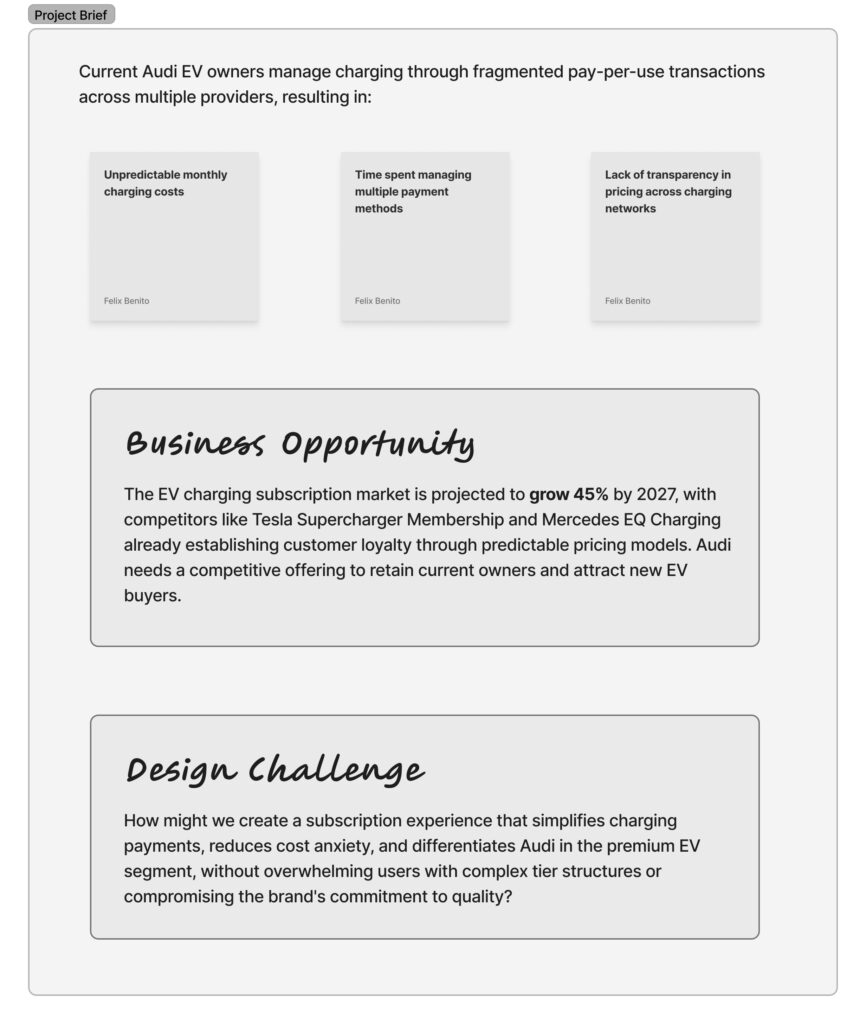
Audi is evolving its electric vehicle ecosystem with a new subscription-based charging model aimed at reducing costs, improving charging efficiency, and enhancing the overall ownership experience.
As the product designer I led competitive analysis to identify best-in-class features, conducted heuristic evaluations to uncover usability gaps in the existing interface, and developed prototypes that addressed accessibility issues while introducing the new subscription framework.
Tools used: Figma, Figjam, Illustrator, Photoshop, User testing, Figma Make.
Timeline: one year.
Team: 12 people including me as the product designer, a manager, developers, a Q&A and a lead architect.
Project management: Agile.
Countries applied: Canada and USA
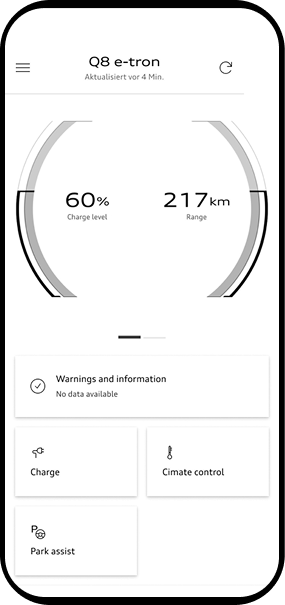
Problems identified in the current solution
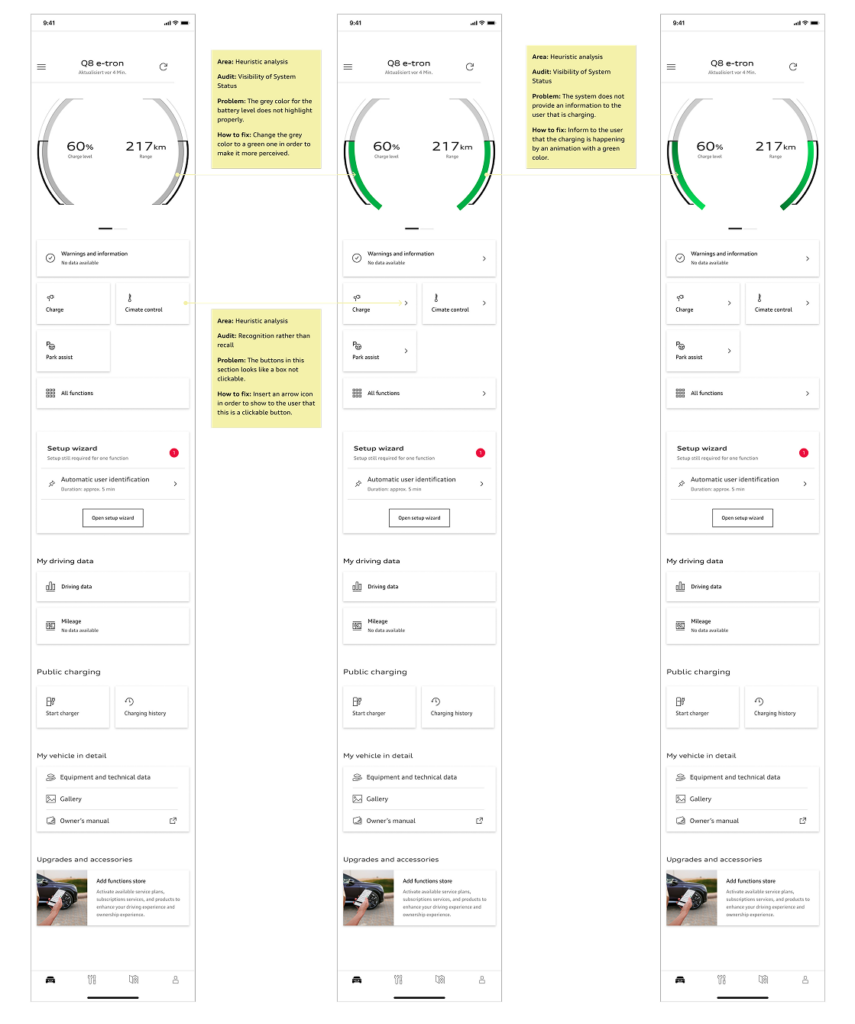
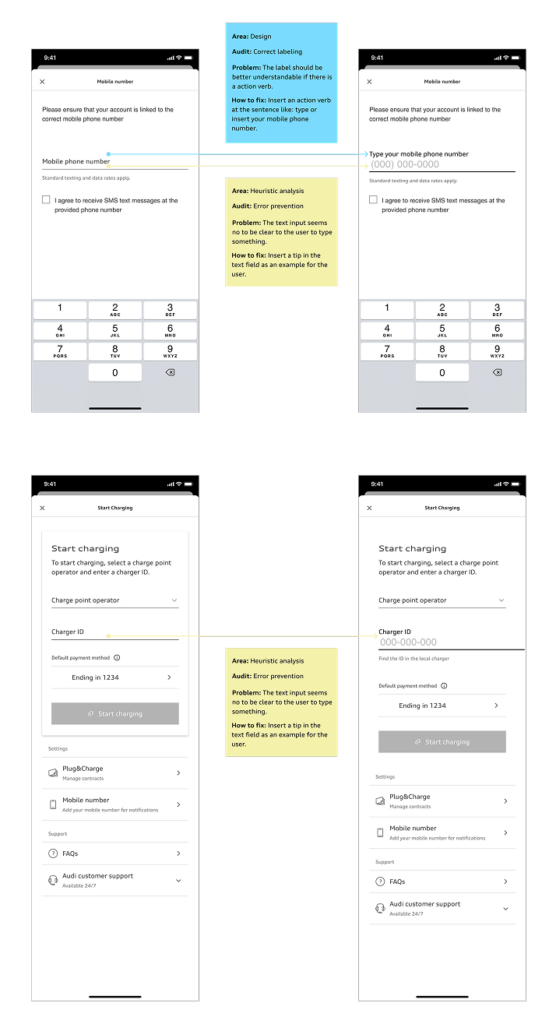
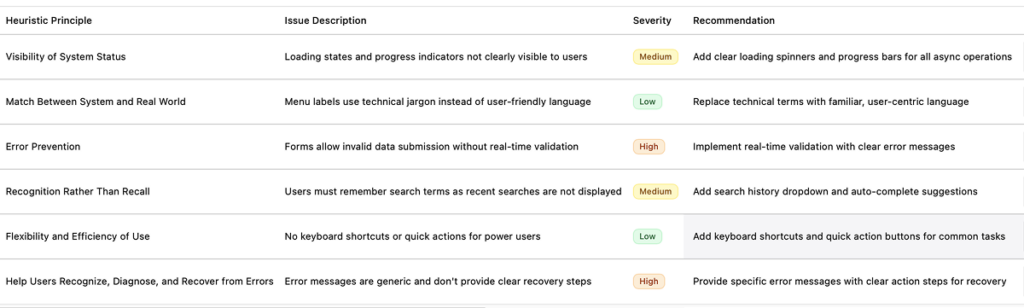
Heuristic analysis
To check the usability issues and identify improvement opportunities, I conducted a heuristic analysis of the system.
To achieve the outlined goals, the audit will focus on the following key objectives:
- Heuristic Evaluation: Apply established usability heuristics to systematically analyze the Session Charging feature, identifying potential usability issues.
- Design Consistency Review: Examine the visual and functional consistency of the feature with the overall design language of the myAudi app.
- Accessibility Standards Assessment: Evaluate the design against recognized accessibility standards (e.g., WCAG) to ensure inclusivity.
- Interaction Flow Analysis: Map out the user journey within the Session Charging feature to identify any friction points or confusing interactions.
- Visual Design Critique: Assess the visual elements of the design, including layout, color schemes, typography, and iconography, to ensure they enhance usability and brand alignment.
Contrast color in the charger
Complete inputs with info
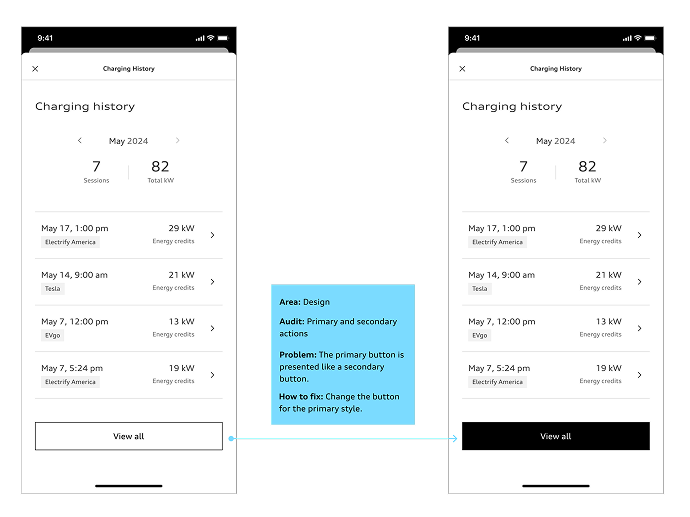
Review buttons - primary and secondary
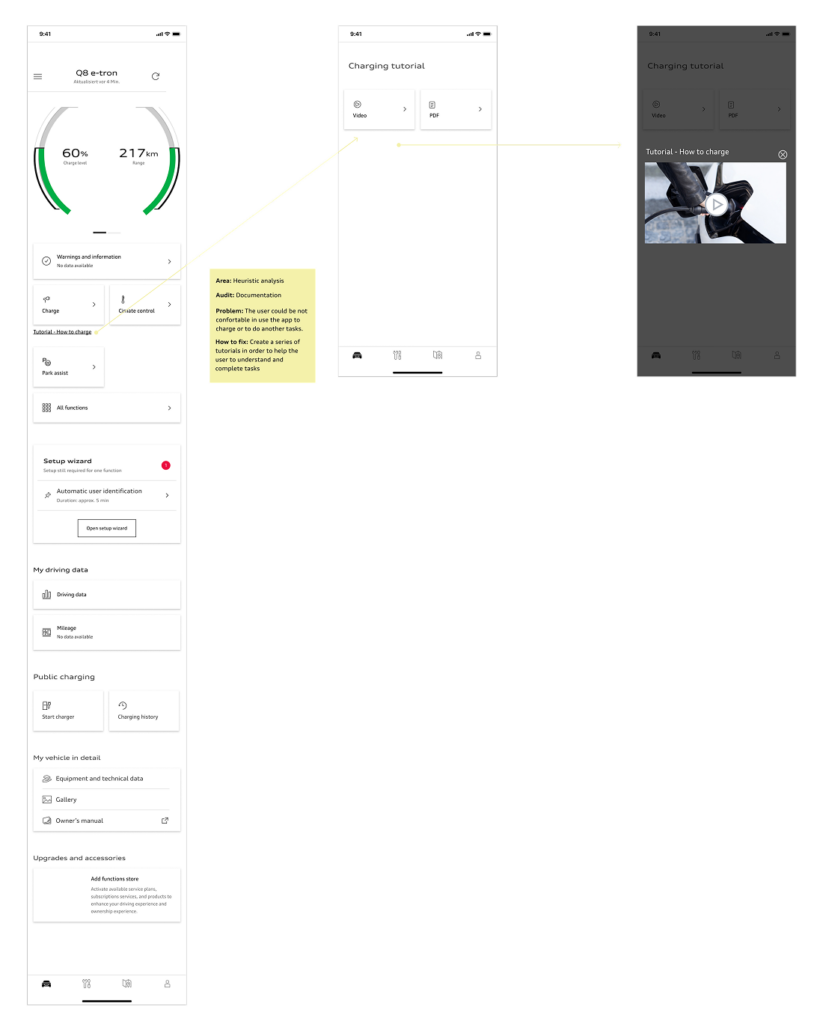
Tutorial suggestion - How to charge
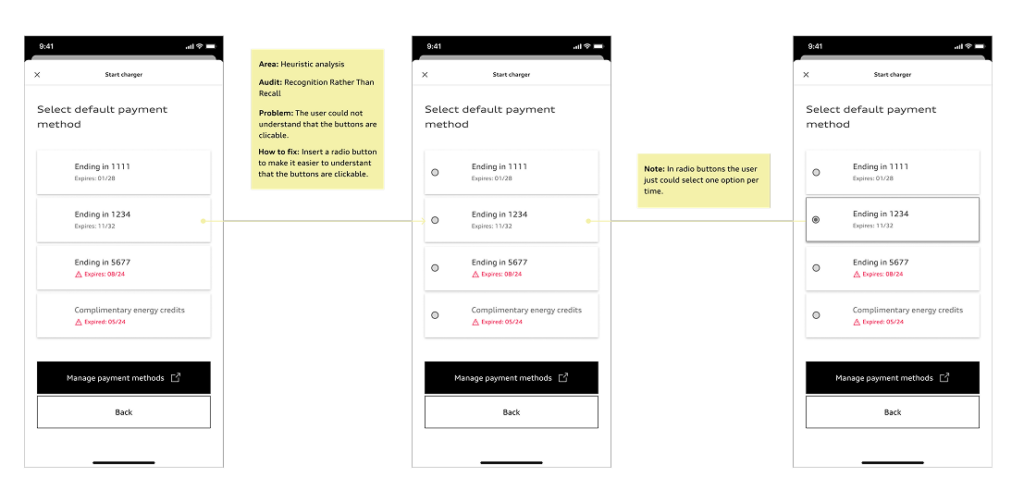
Insert a selector in payment methods
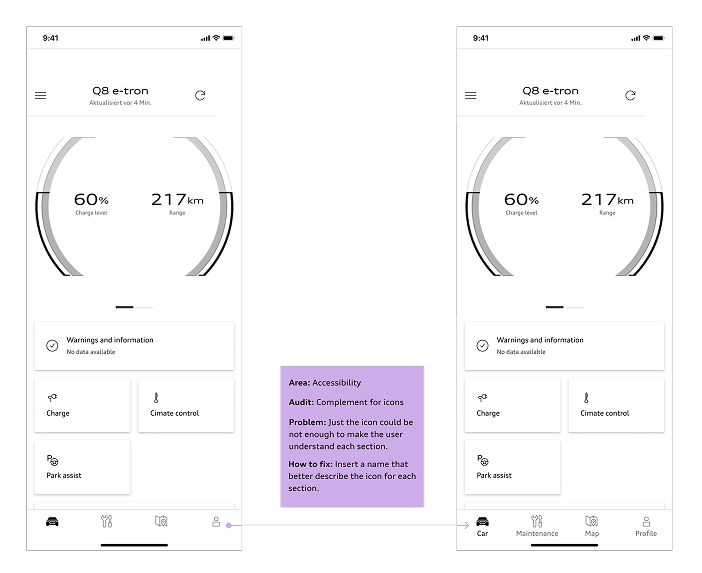
Naming the sections at menu
List of improvements identified and prioritize
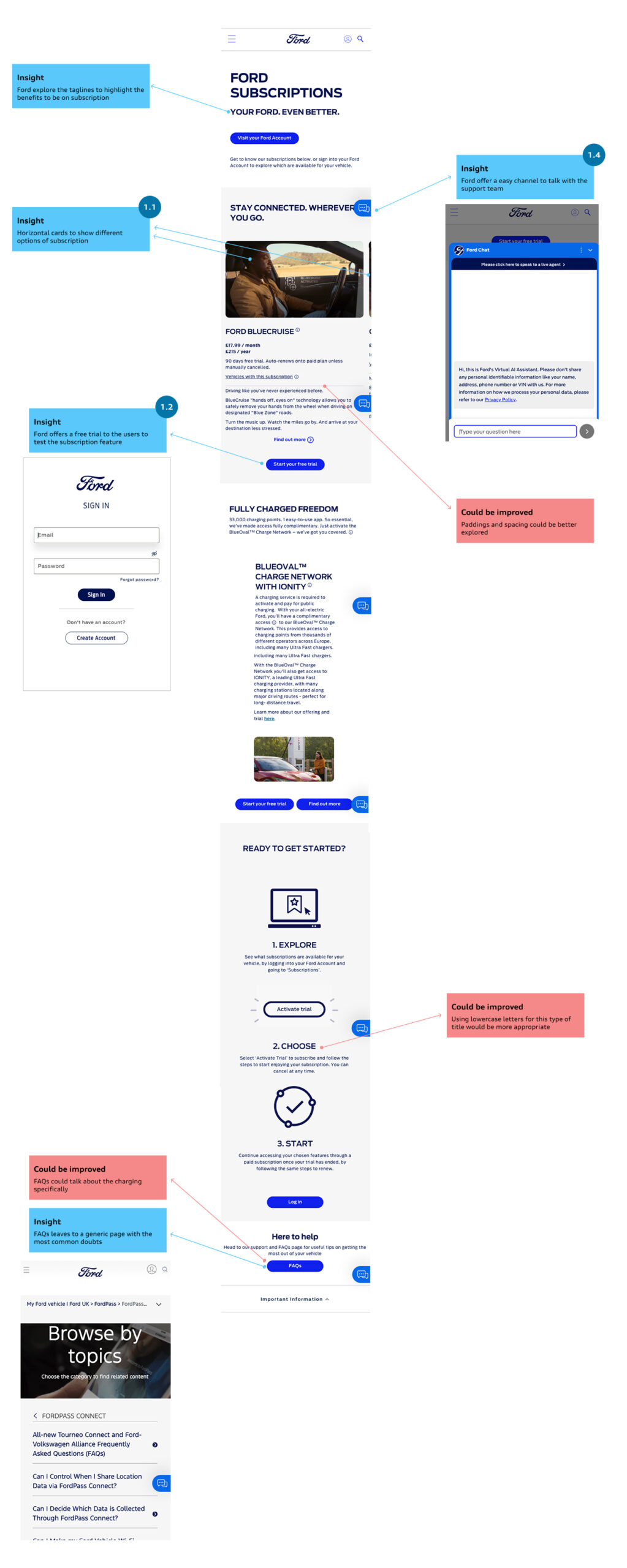
Competitive analysis
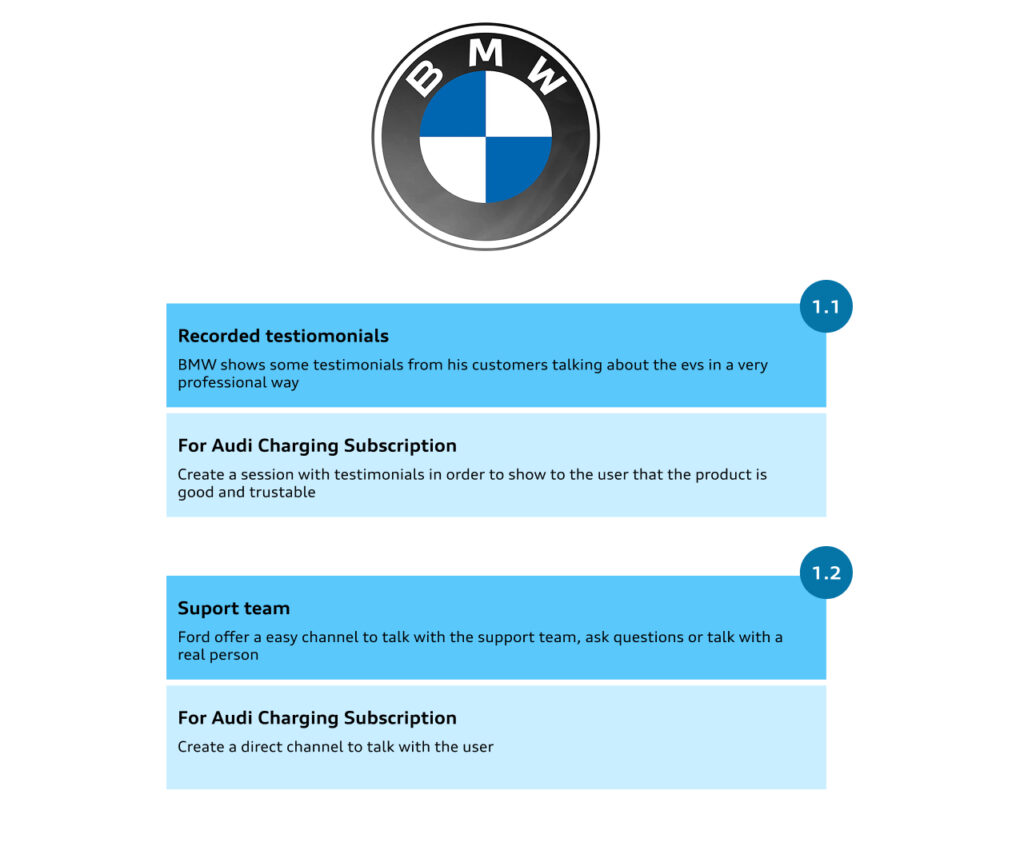
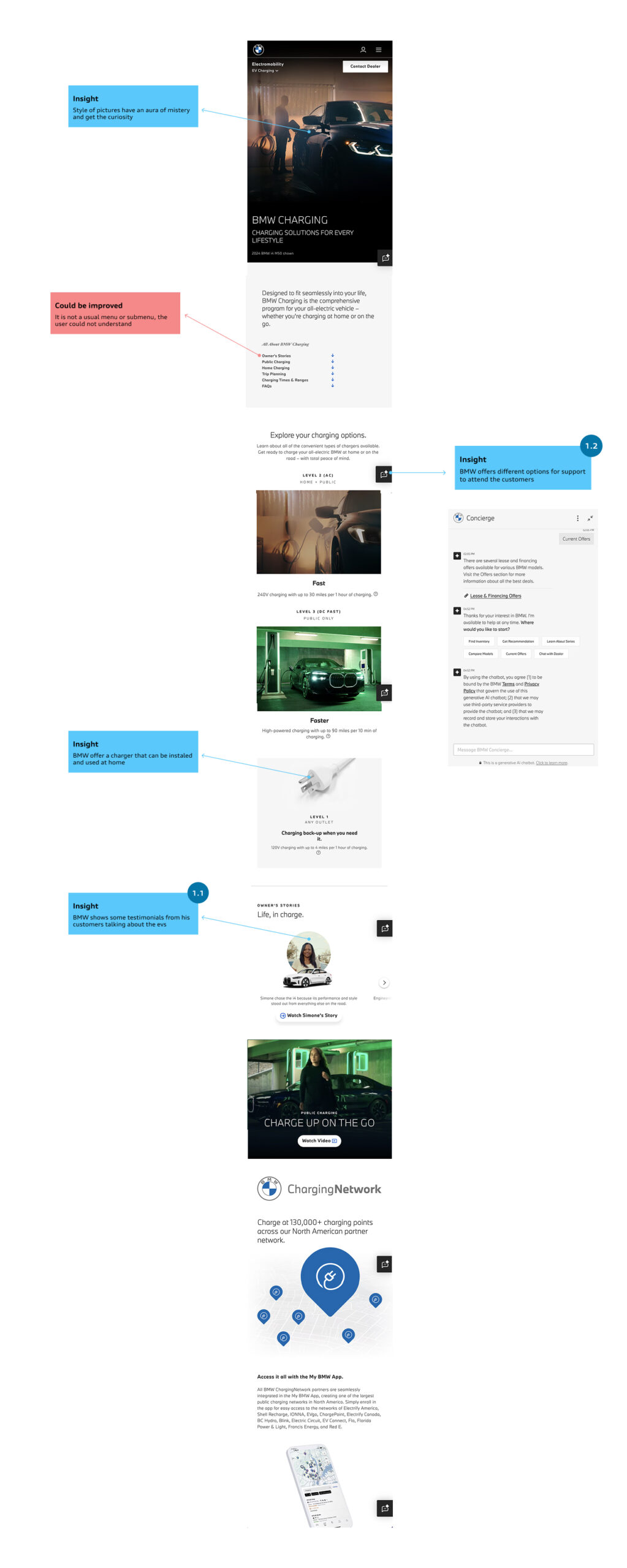
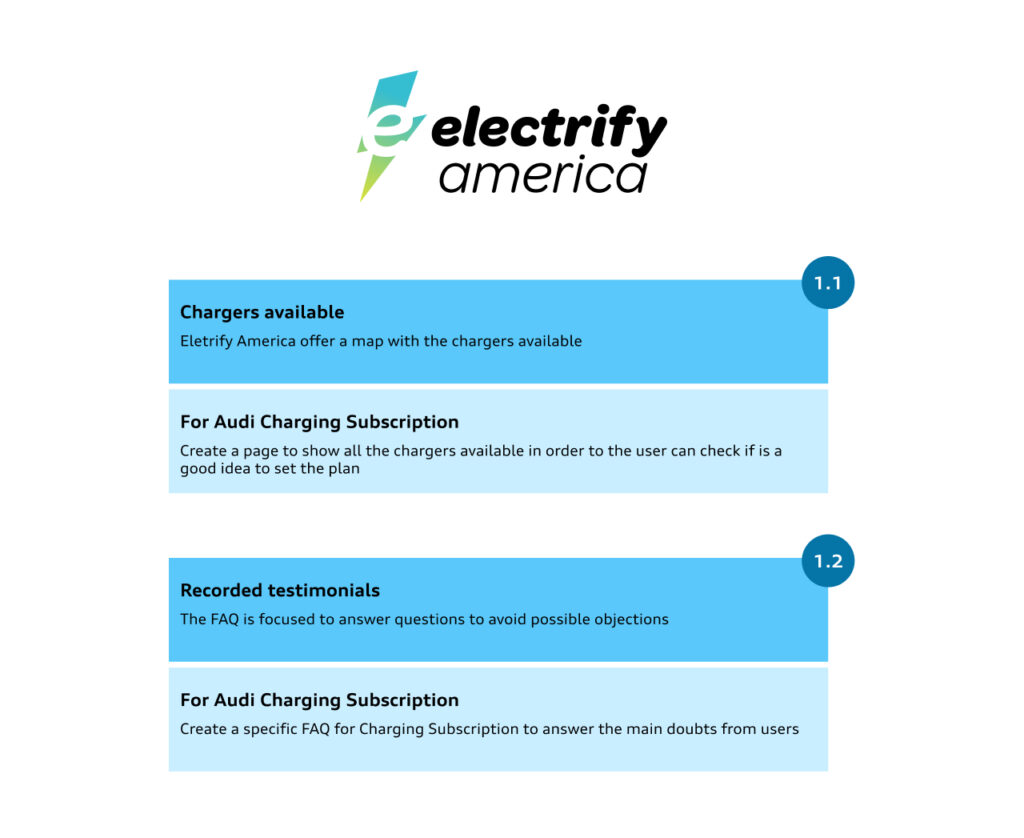
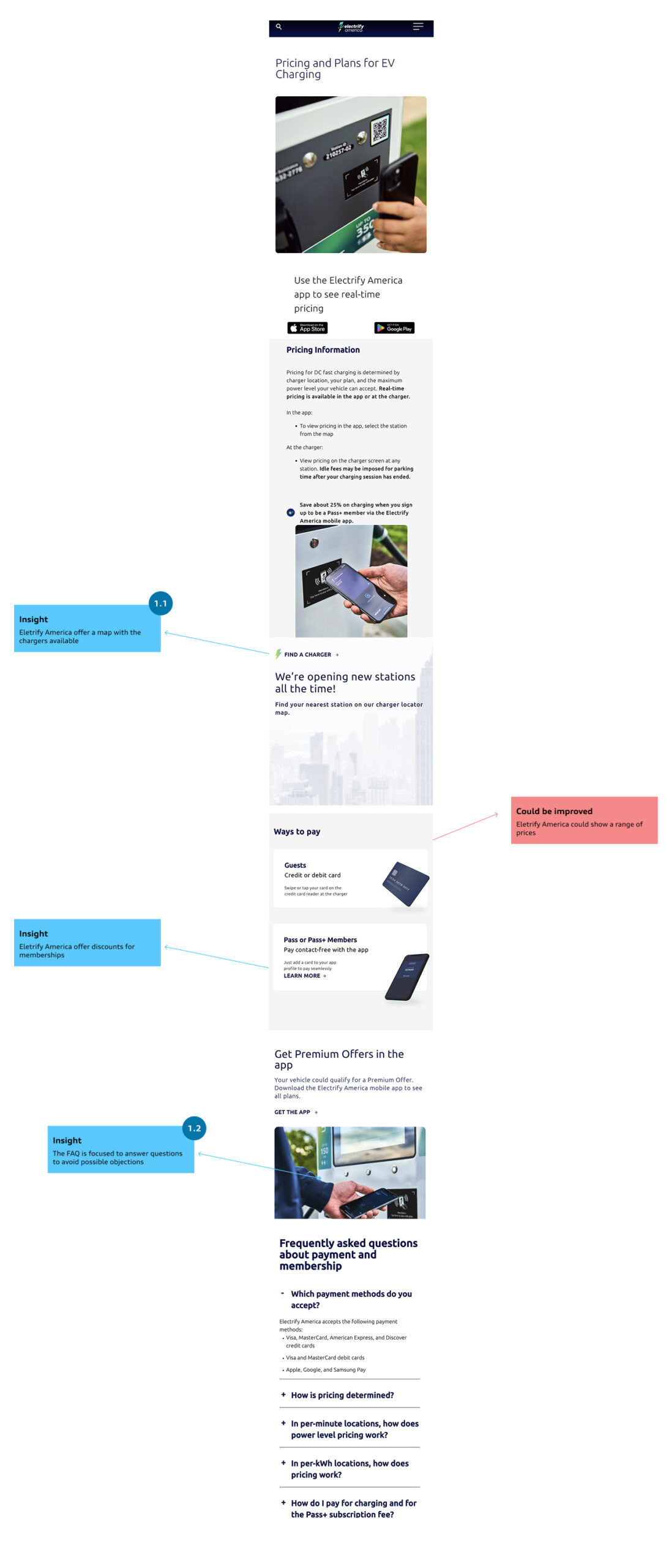
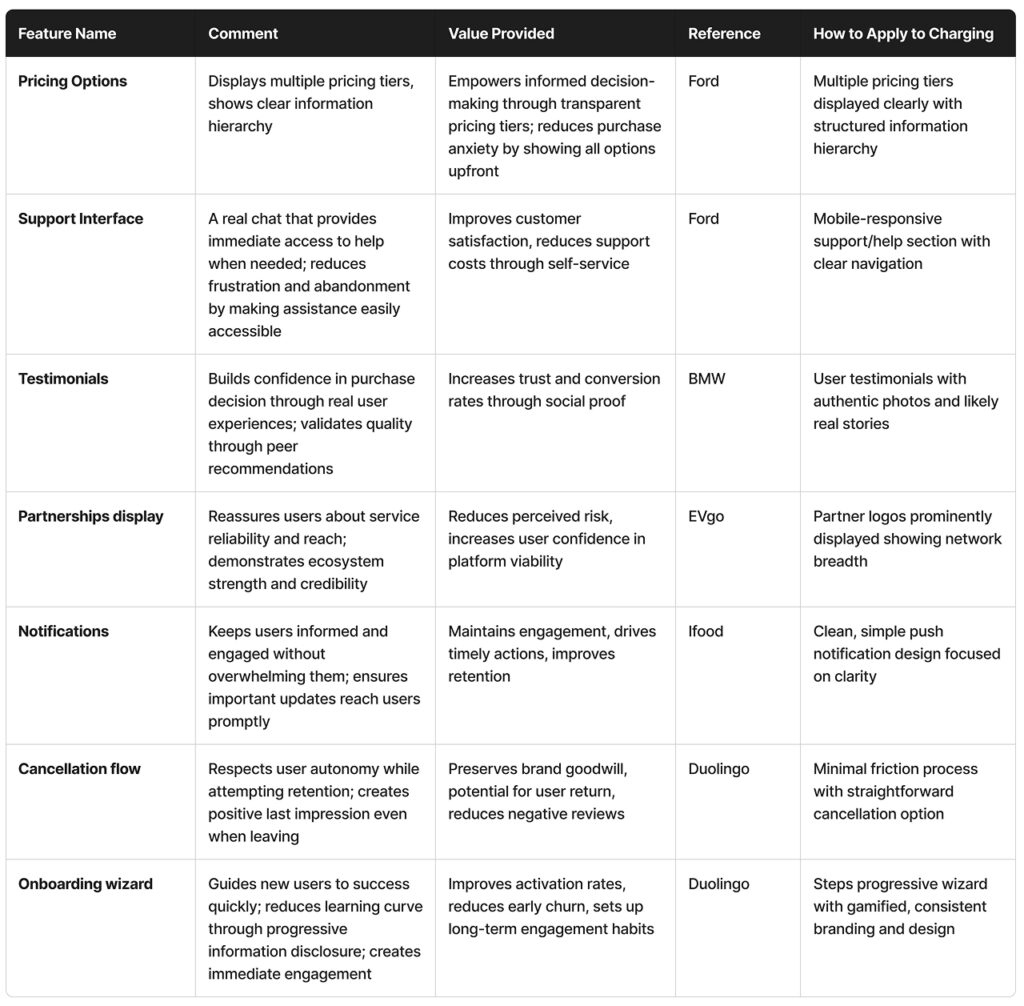
I conducted a competitive analysis to understand the market landscape, analyze user flows, and identify emerging trends.
By systematically reviewing these datasets, we aim to identify trends, innovative strategies, and best practices that can inform and enhance Audi’s subscription offerings. This data-driven approach will enable us to gather valuable insights and propose actionable improvements, ensuring that Audi remains competitive and responsive to evolving customer expectations in the subscription landscape.
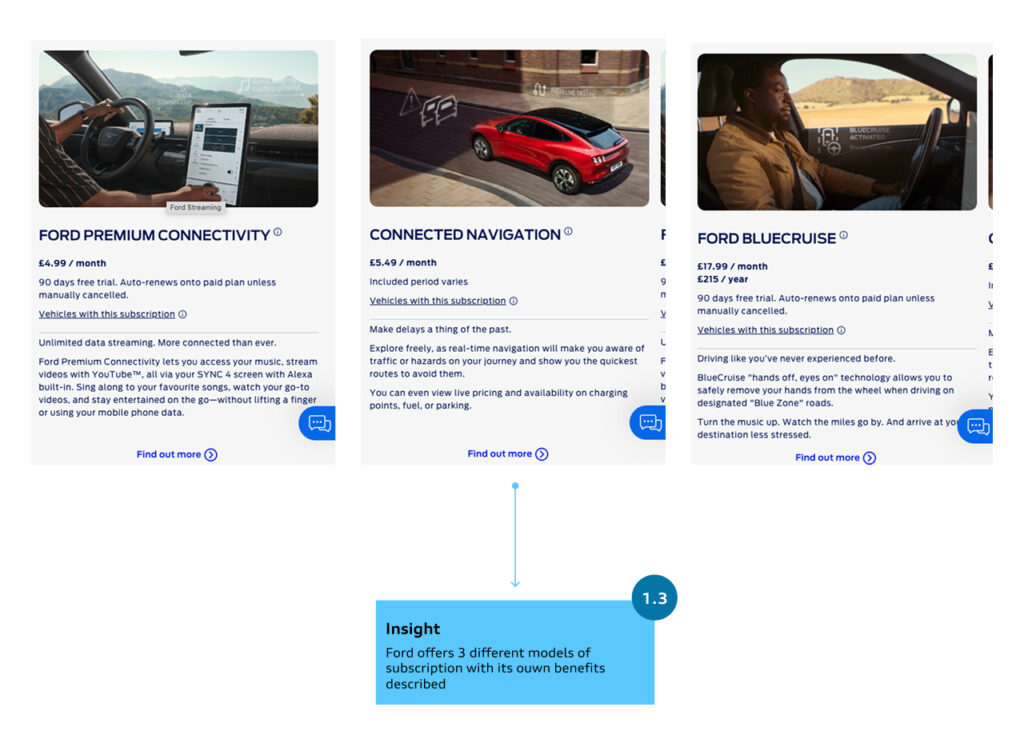
Direct competitors analysis
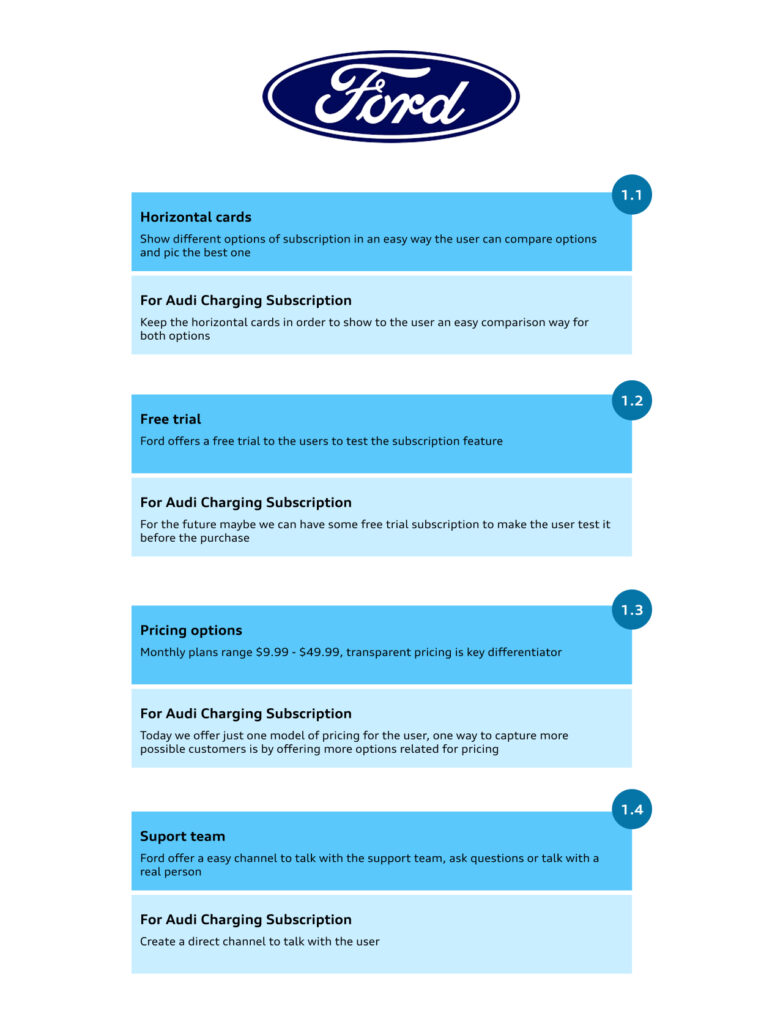
List of improvements identified and prioritize
Insights from the competitive analysis informed the feature set for the Audi Charging Subscription, outlined below.
User research
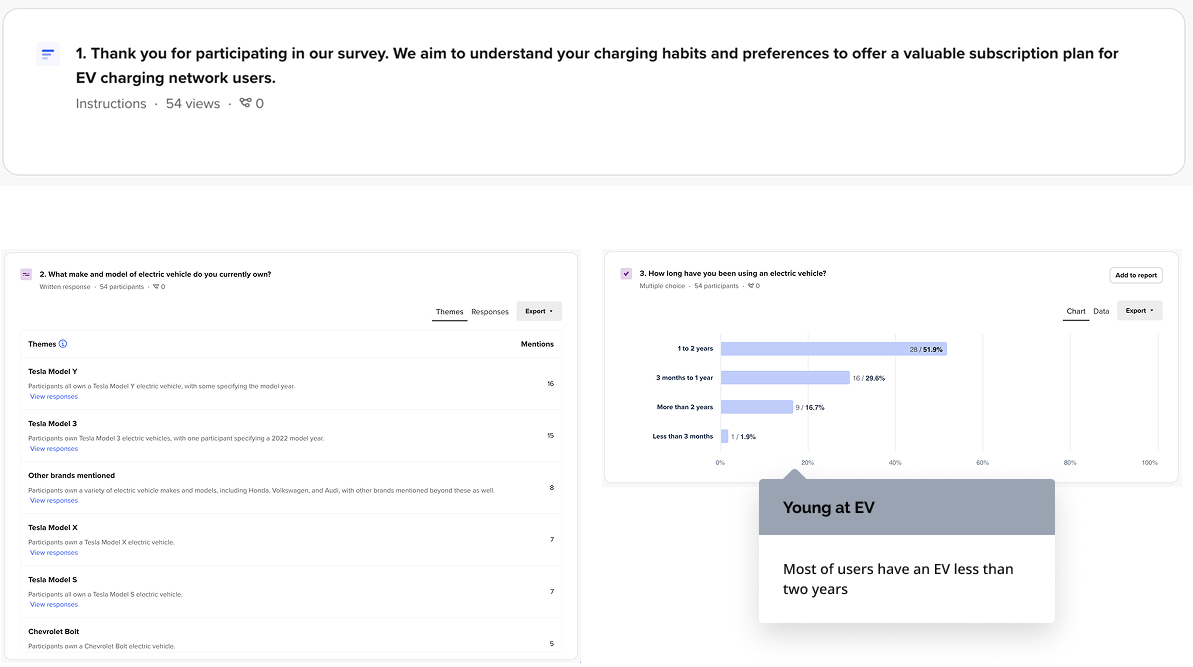
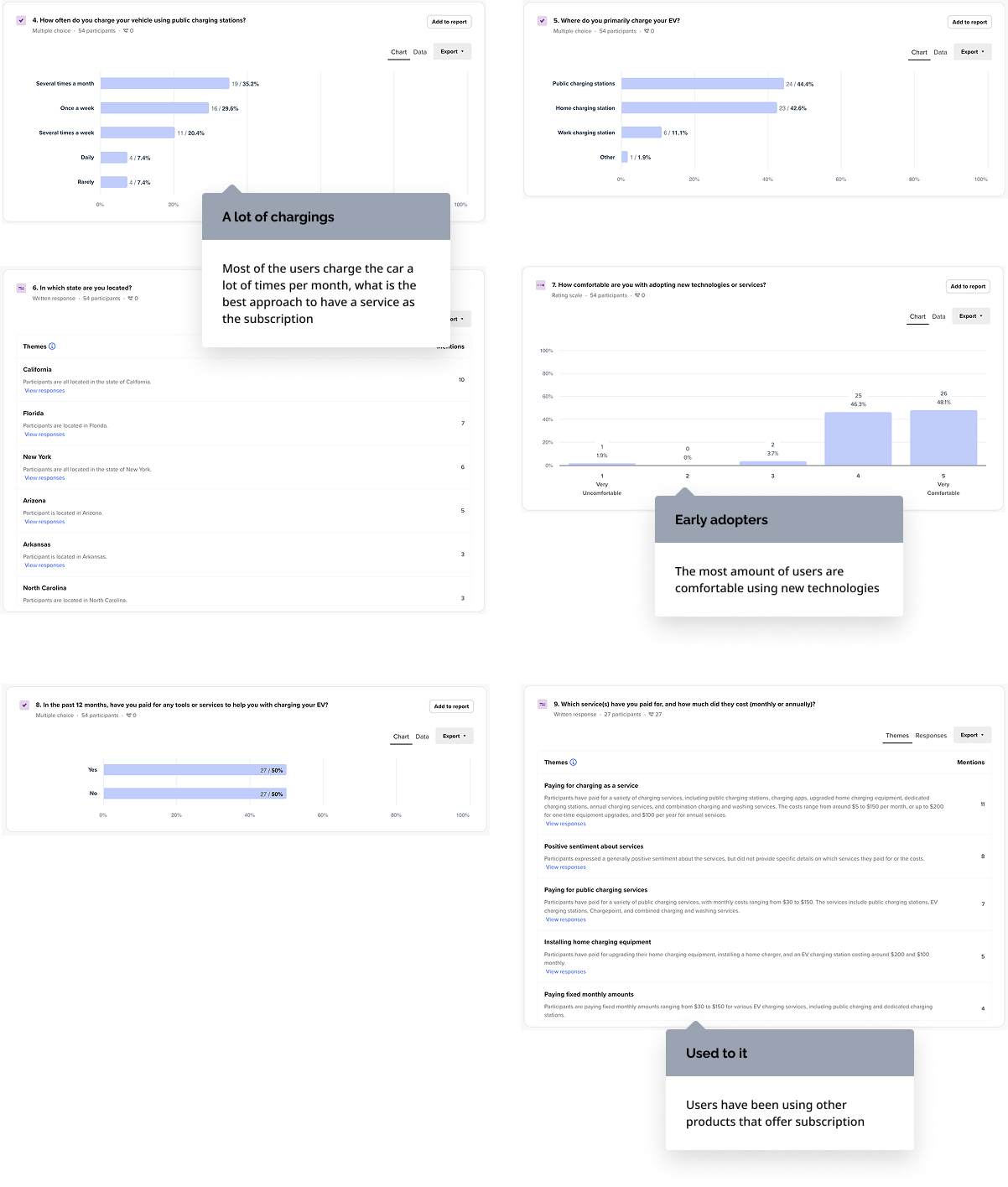
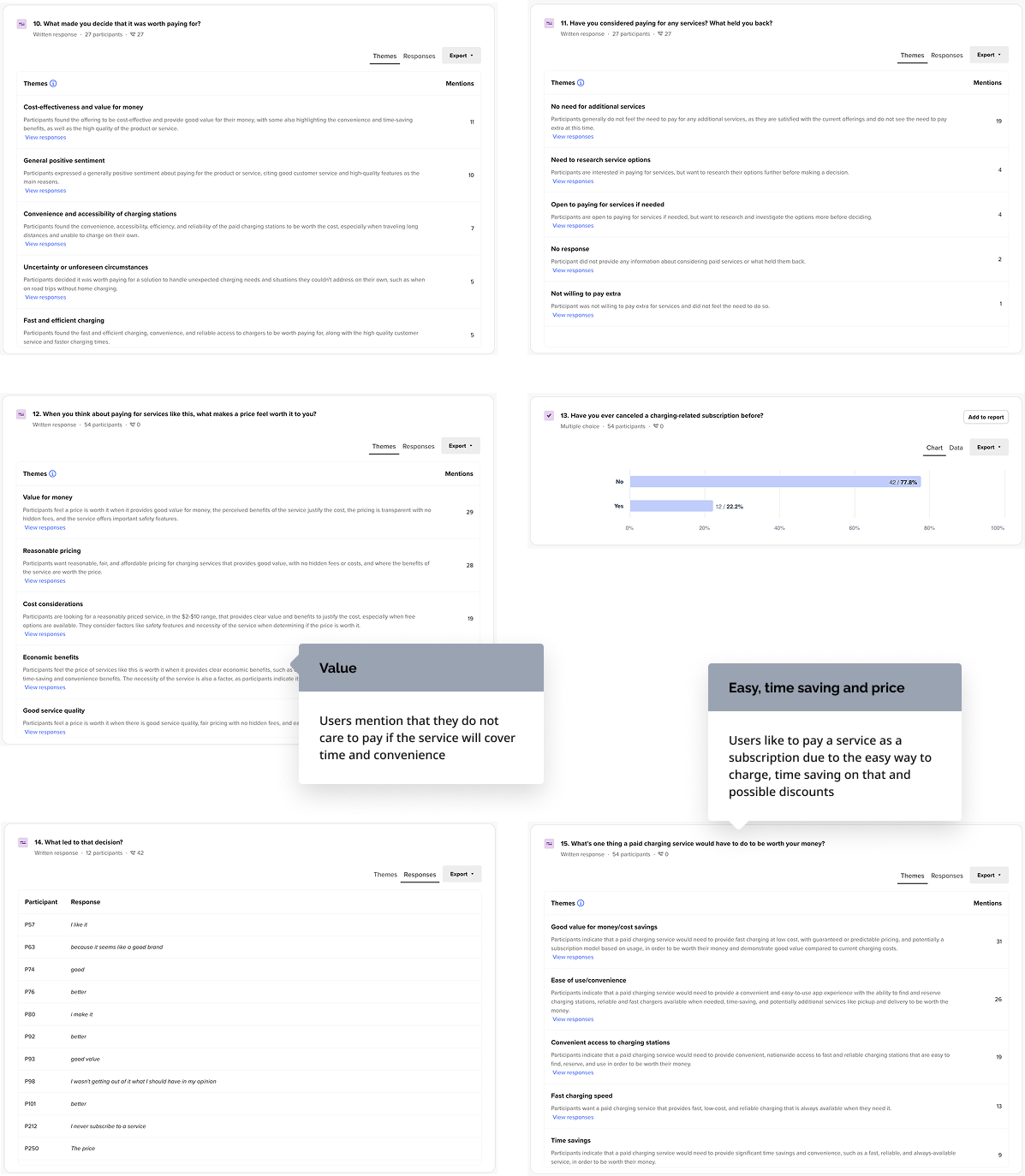
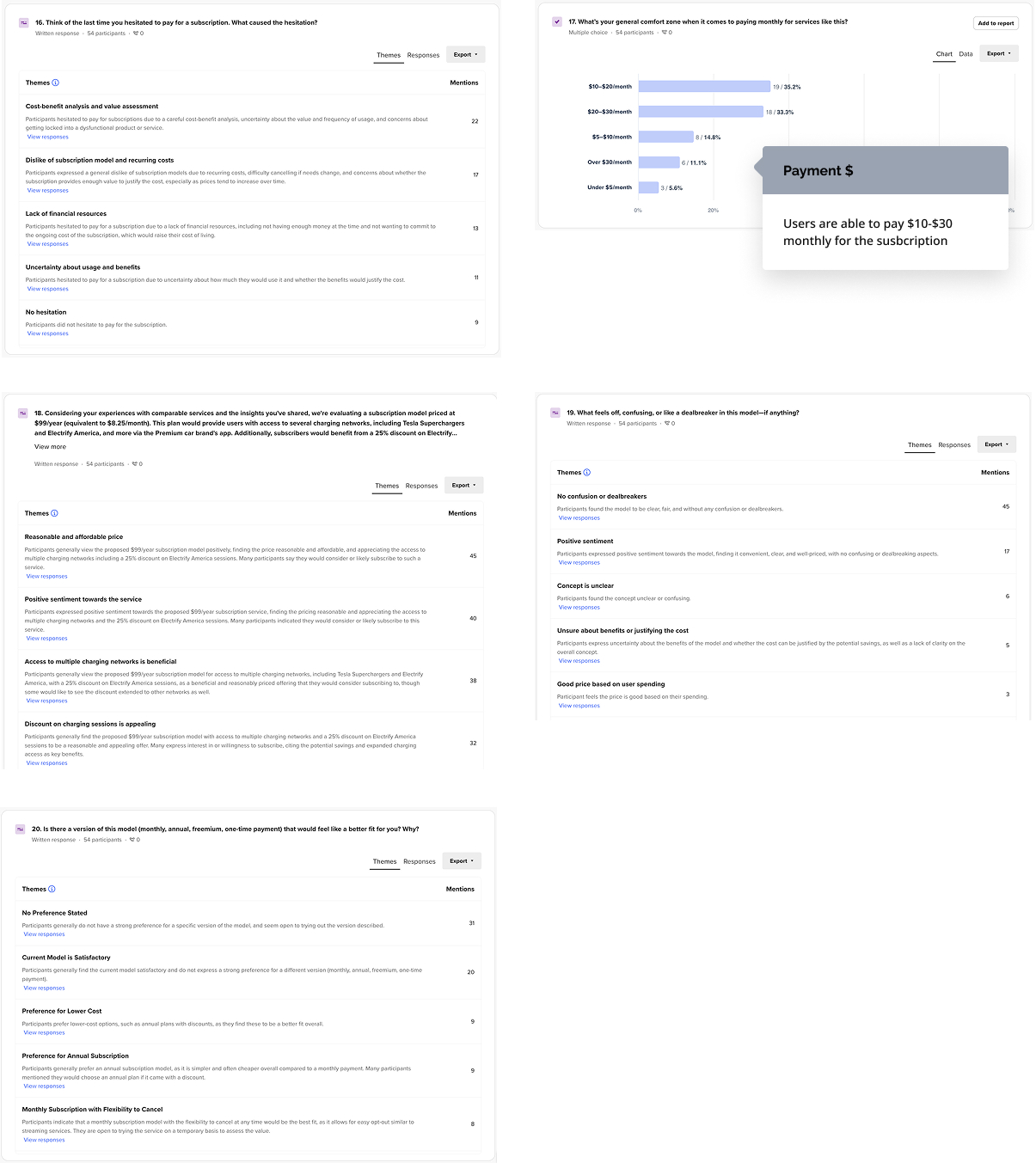
We wanted to discover how the user know about subscription ways to pay and how they use daily in their routine, also items related to price and benefits.
Script
Define the scope and objectives of the user research, focusing on understanding user willingness to pay, perceived value, and pain points related to subscription-based car features.
Find and analyze the current market for in-car subscription services that users like to have, research and compare the various pricing models for these subscriptions, such as per-feature, bundled, tiered, or limited-time access.

Charging subscription
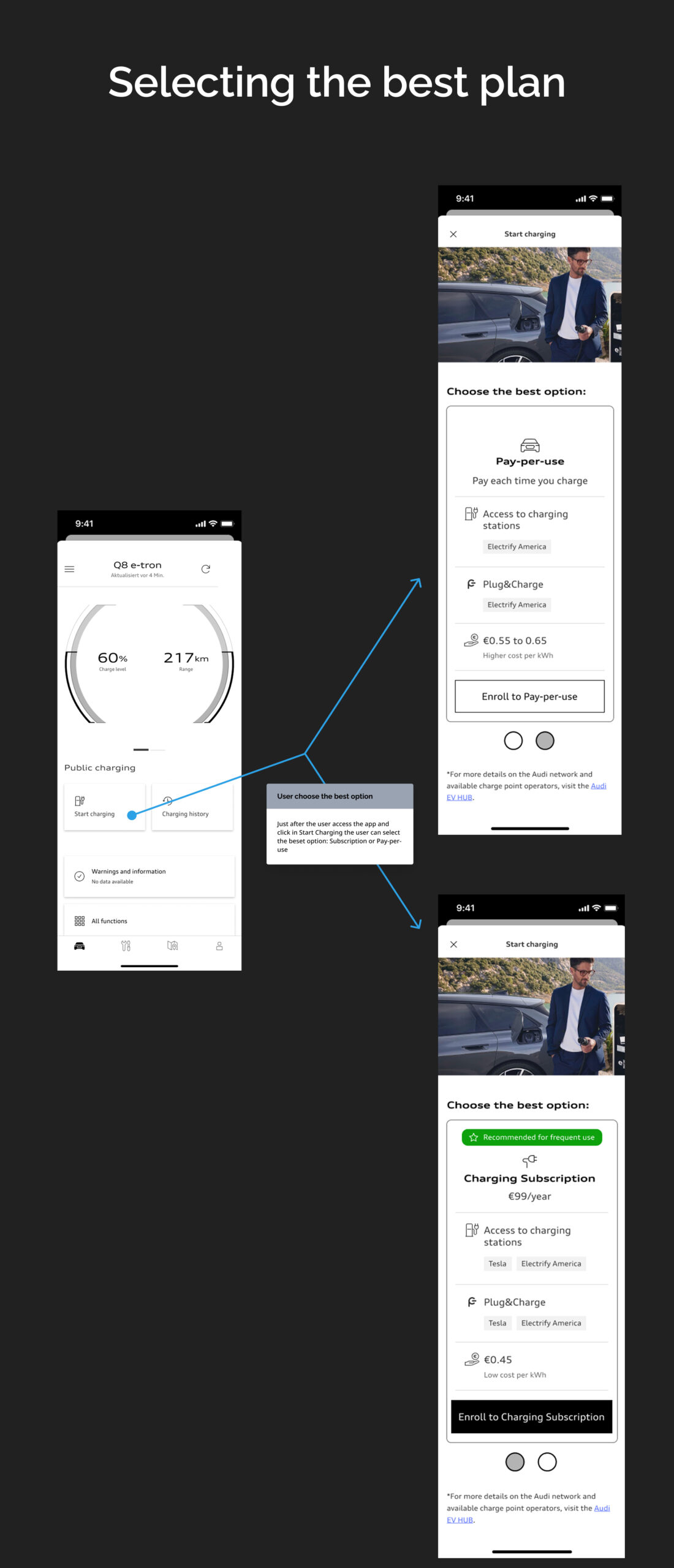
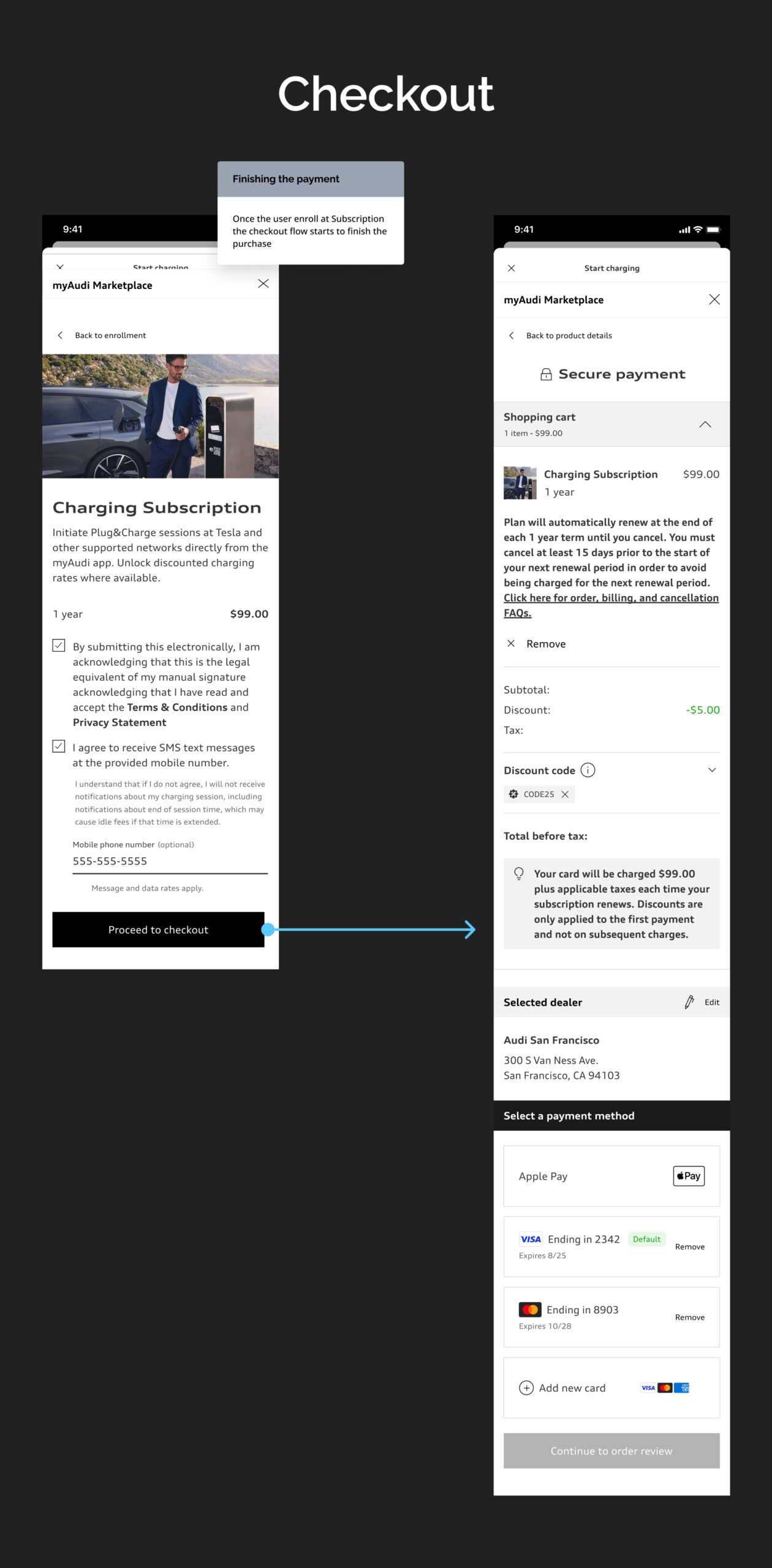
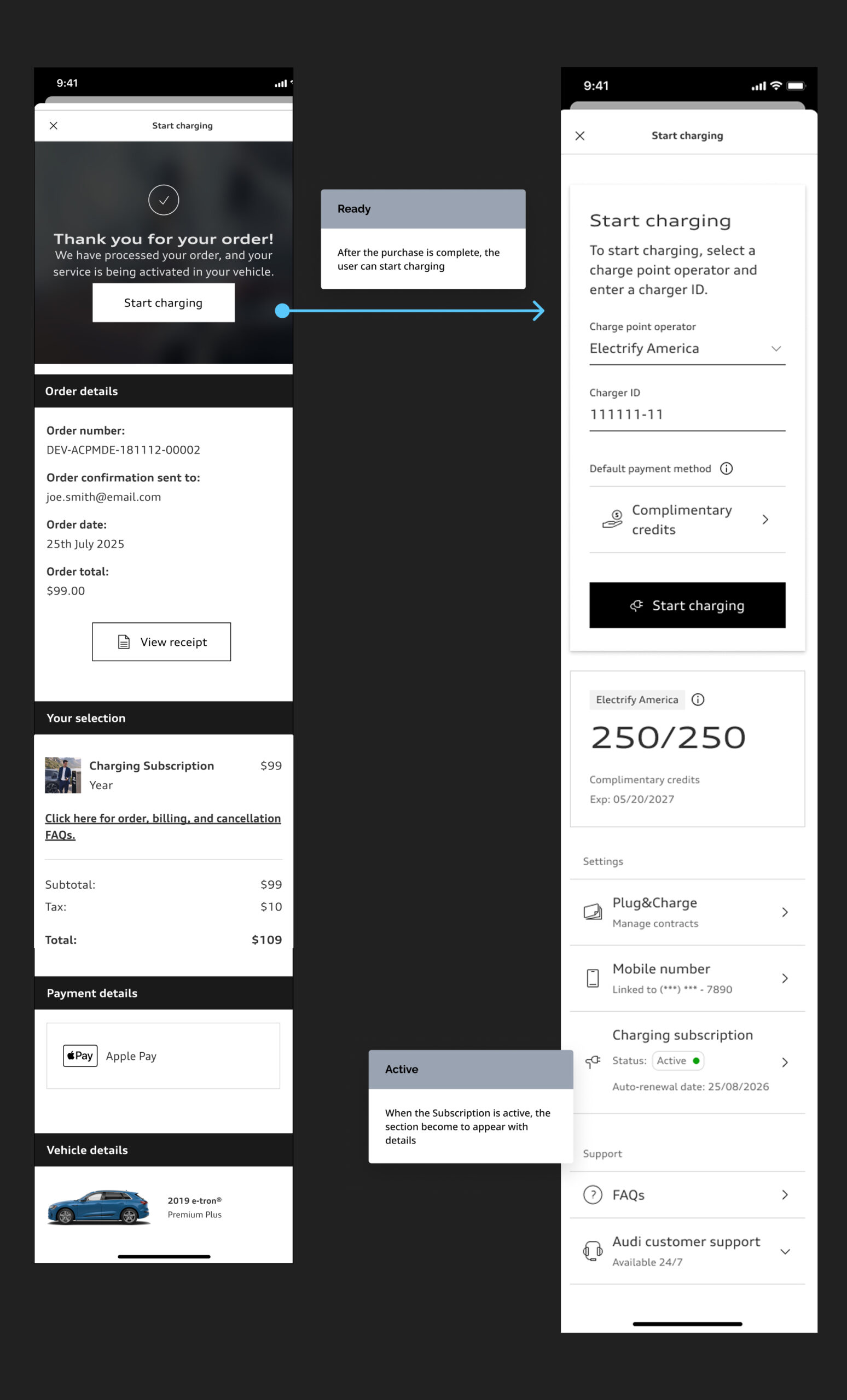
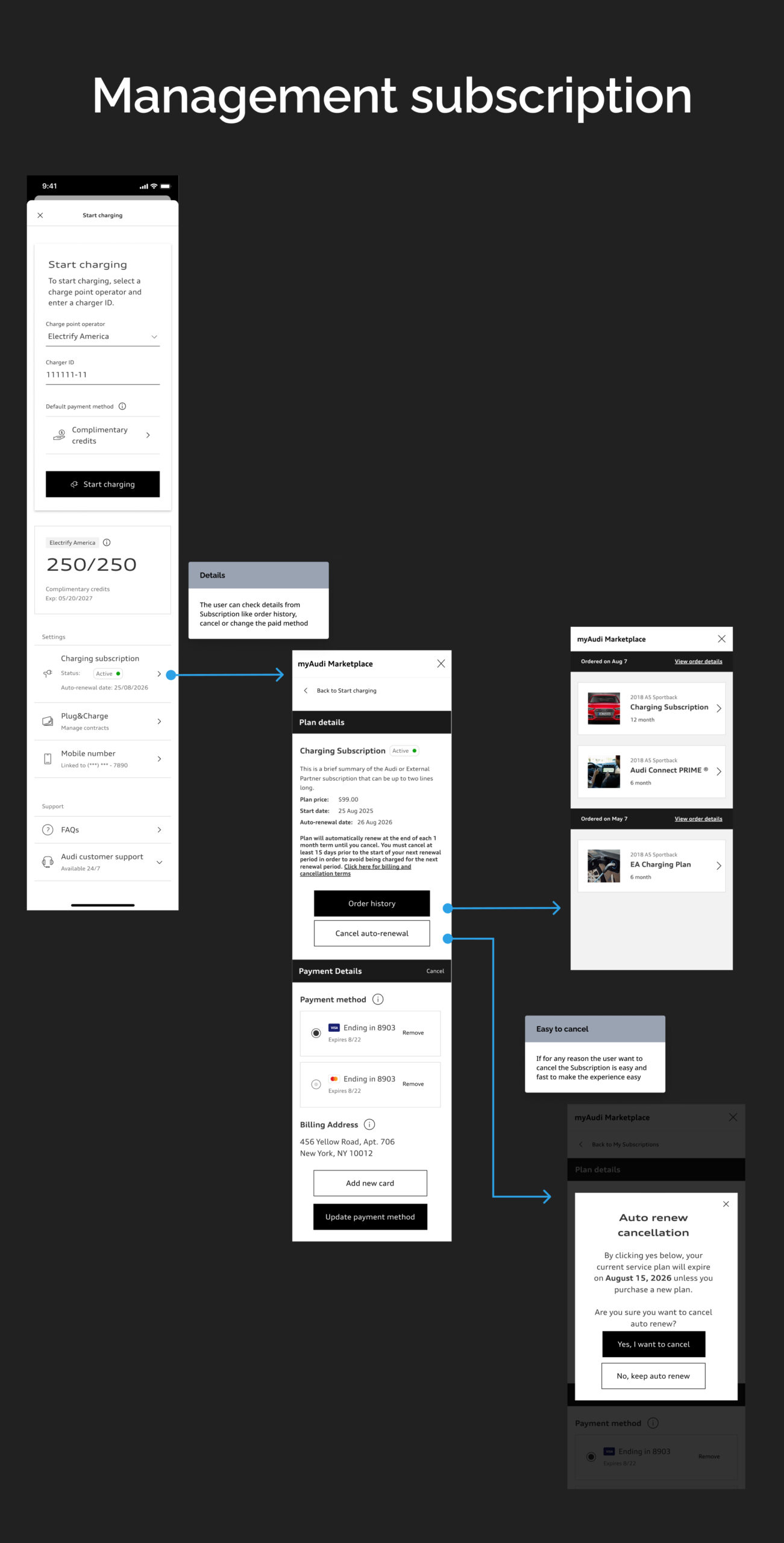
The Audi Charging Subscription simplifies the EV charging experience by offering users a predictable monthly payment model instead of pay-per-use transactions.
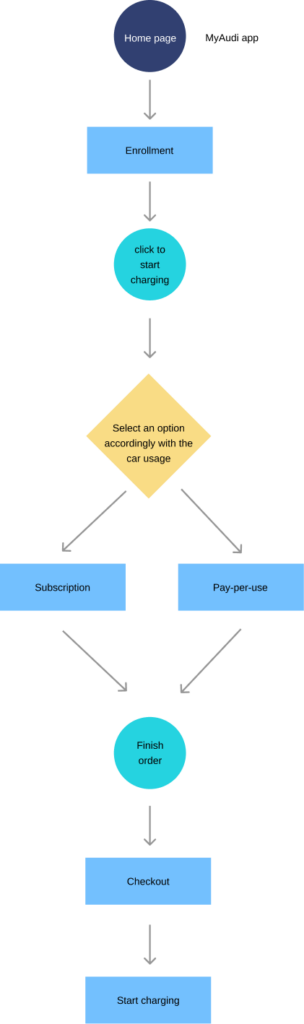
Based on the results collected in the research (competitivie analysis and survey) I initiated discovery by facilitating collaborative workshop sessions with cross-functional stakeholders to map out the user flow and define key touchpoints. The resulting flow is presented below:
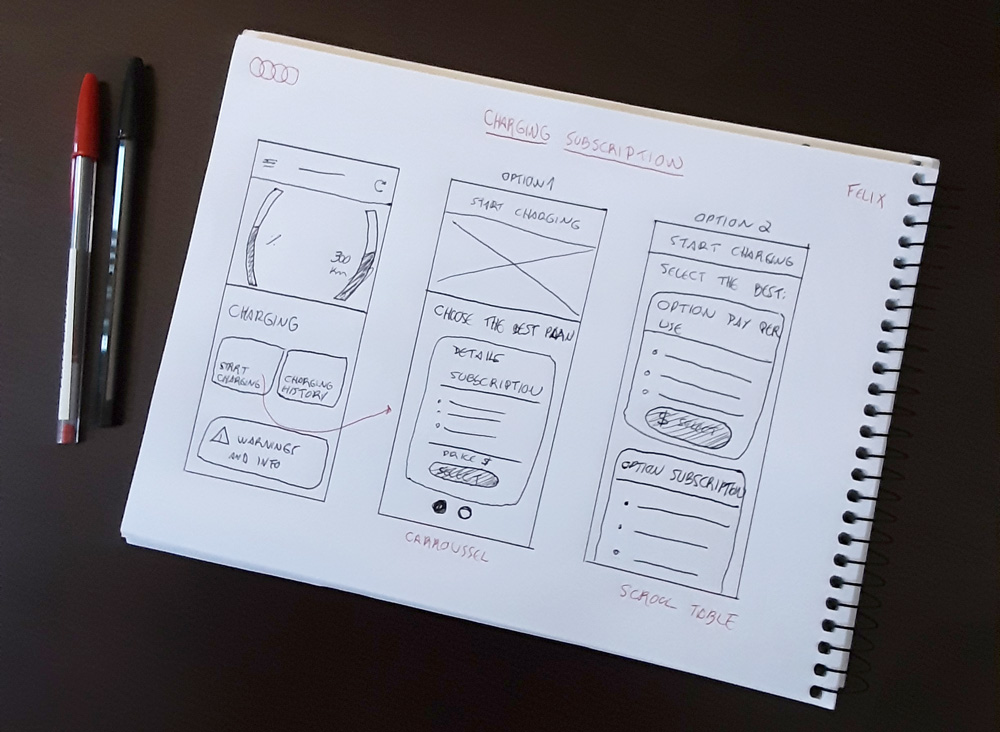
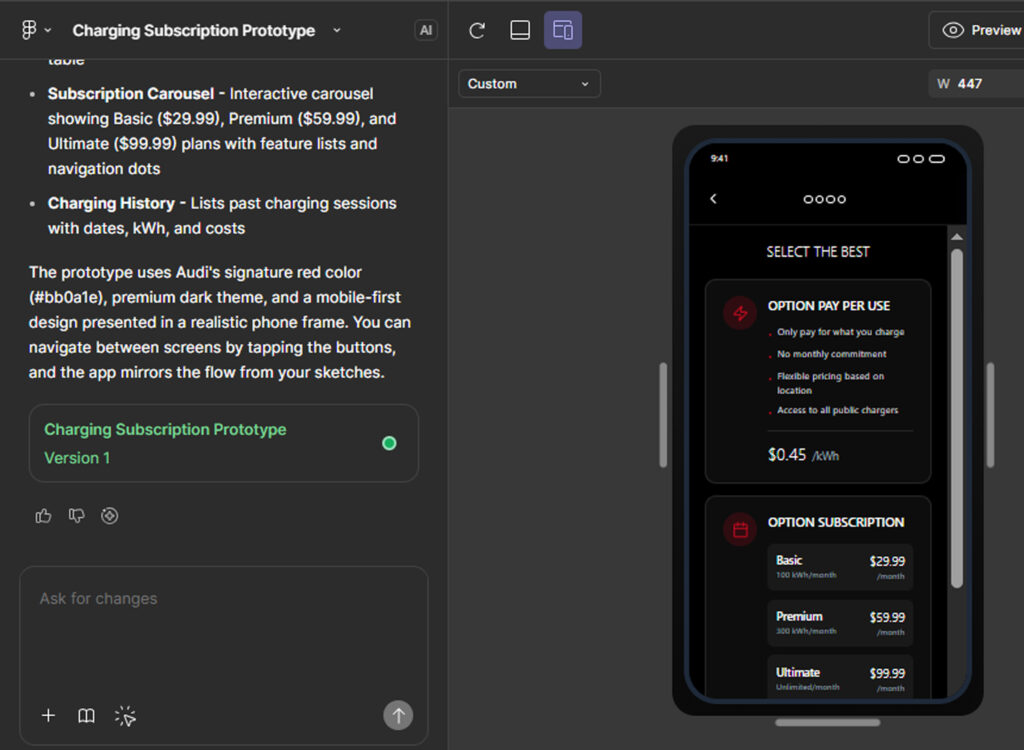
Paper and AI prototyping
With the user flow validated, I began translating concepts into tangible designs by starting with rapid paper sketches to explore layout options, then leveraging AI tools to refine and iterate on the most promising directions
High fidelity prototype
Following team review and feedback on the initial sketches and AI-refined concepts, I moved into high-fidelity design, applying Audi’s visual system, refining the information hierarchy, and ensuring accessibility standards were met.
To facilitate smooth handoff, I documented detailed specifications including component behavior, spacing tokens, and interaction states to support accurate development implementation.
Results
- Research-Driven Strategy: Synthesized findings from competitive analysis and user research to build an evidence-based feature roadmap with prioritized iterations.
- Cross-Functional Alignment: Collaborated with engineering and product stakeholders to balance user needs with technical constraints and business goals.
- Accelerated Ideation: Leveraged AI tools to rapidly generate and test low-fidelity concepts, enabling faster validation and iteration cycles.
- UX Optimization: Identified critical usability gaps through heuristic evaluation and redesigned flows to improve accessibility, information hierarchy, and overall user experience.
Continue exploring: