The Owner’s Literature and Maintenance features within myAudi consolidate essential vehicle resources for North American customers.
While these tools aim to save users time and money, initial research revealed significant friction in the existing service.
As Product Designer, I bridged this gap by leading discovery sessions, user testing and data into high-fidelity, functional prototypes.
Tools used: Figma, Figjam, Illustrator, Photoshop, User testing, Figma Make.
Timeline: one year.
Team: 8 people including me as the product designer, a manager, four developers, a Q&A and a lead architect.
Project management: Agile.
Countries applied: Canada and USA
Problems identified in the current solution
The design does not look for a premium user
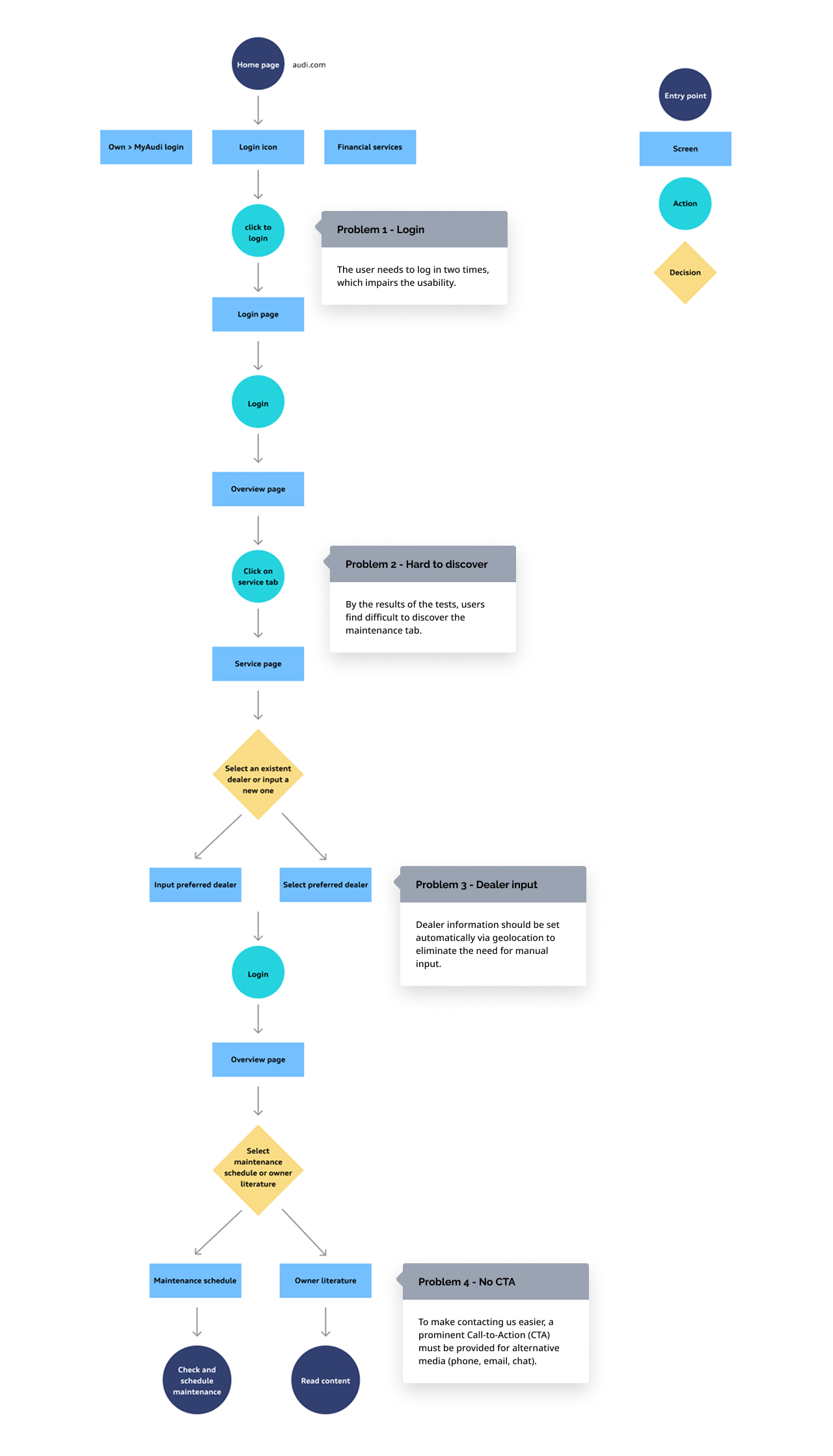
There is no CTA button
Login is too complicated (2 similar steps)
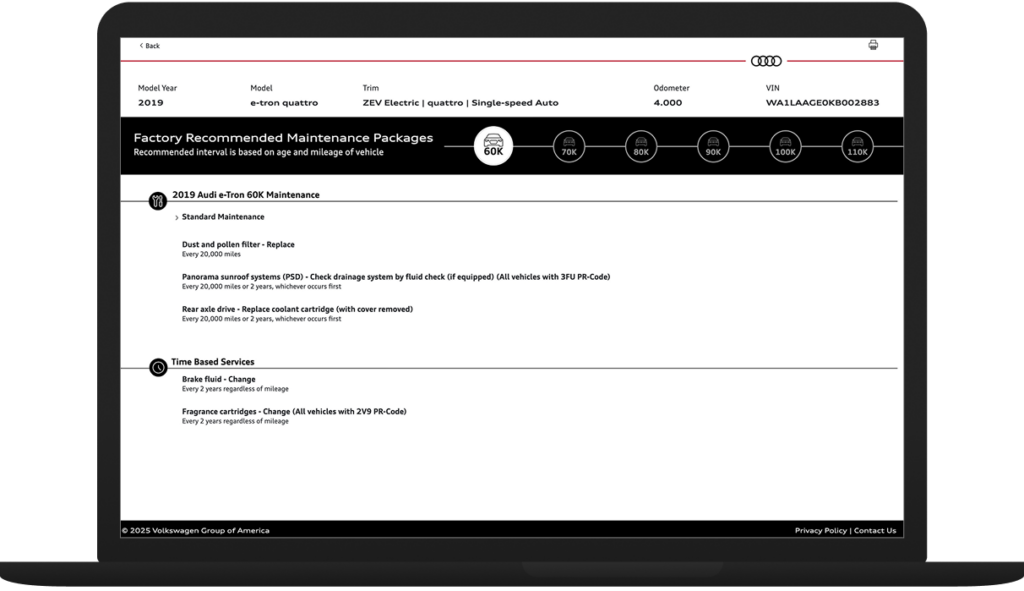
The rule to see the packages is not clear
The content displayed is not easy to read and understand
Problems identified in the current flow
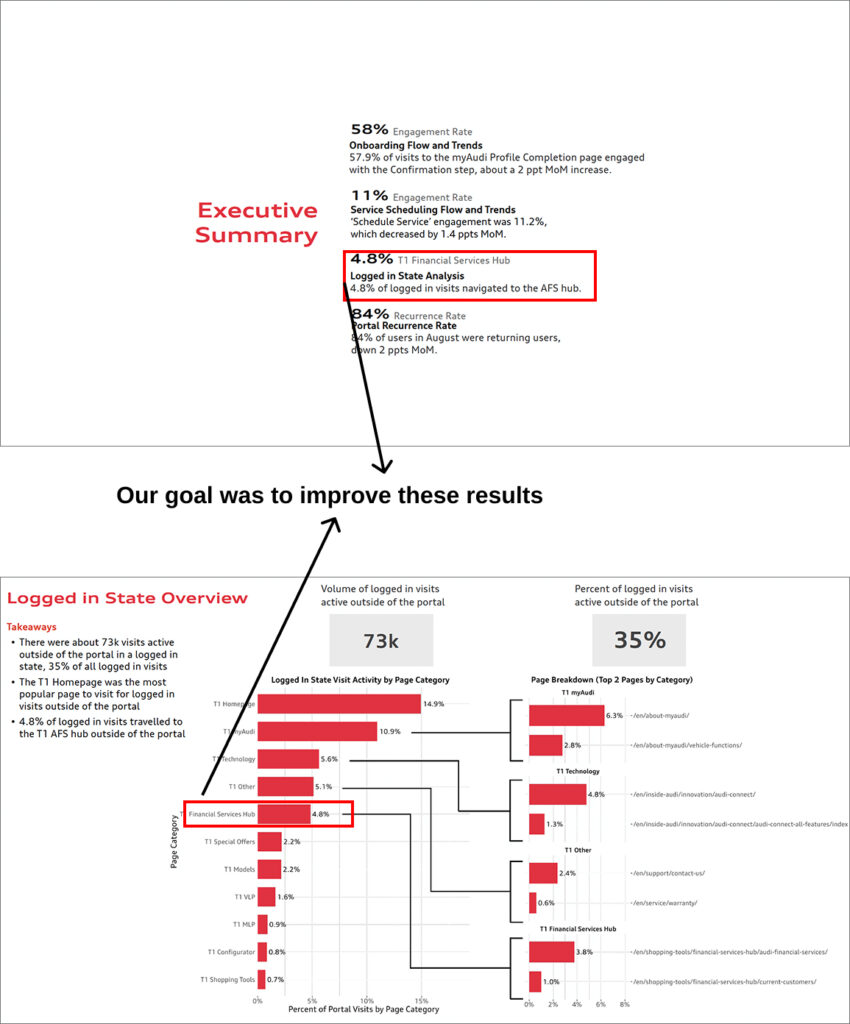
Key performance metrics to improve
The most important data point is the 11.2% Engagement Rate for the “Schedule Service” flow, which is declining.
This signals that users are not successfully completing the scheduling process. We need to improve:
Reducing Friction: The current flow is likely too complex, hidden, or confusing. You need to identify where users are dropping off (e.g., struggling to select a service, a dealer, or a time slot).
Increased Visibility: Ensure the “Schedule Service” feature is highly visible and easily accessible across relevant logged-in pages, especially those related to vehicle information (T1 In-Vehicle, which has the highest traffic).
Path to Purchase/Action: Given that 35% of logged-in visits are outside of the portal, you should investigate whether users are leaving to use external dealer websites or phone numbers to book service, and if your flow can be simplified to compete with these external channels.
Together the business team, we mapped these two objectives:
KR1: Increase engagement with the Maintenance Schedule (measured as clicks/total visits) from 14.6% to 20% within 6 months of launch.
KR2: Increase engagement with Owner’s Manuals (measured as clicks/total visits) from <1% to 5% within 6 months of launch.
User research
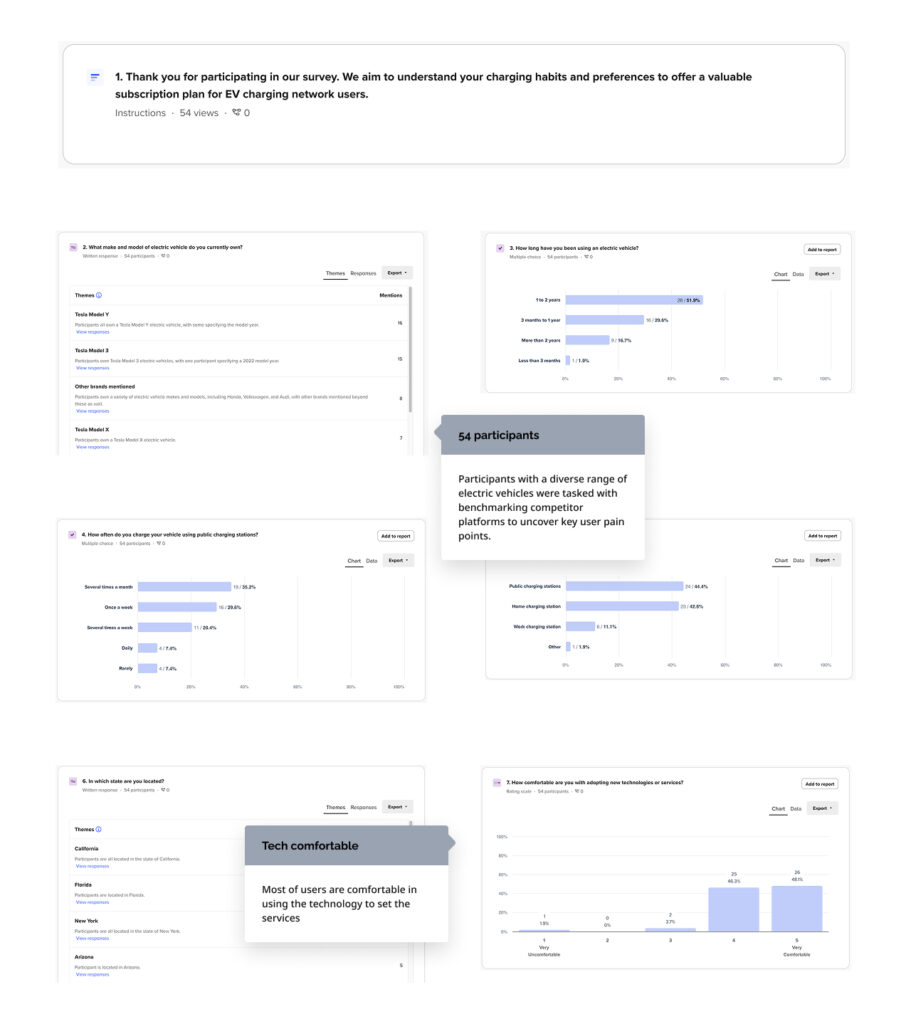
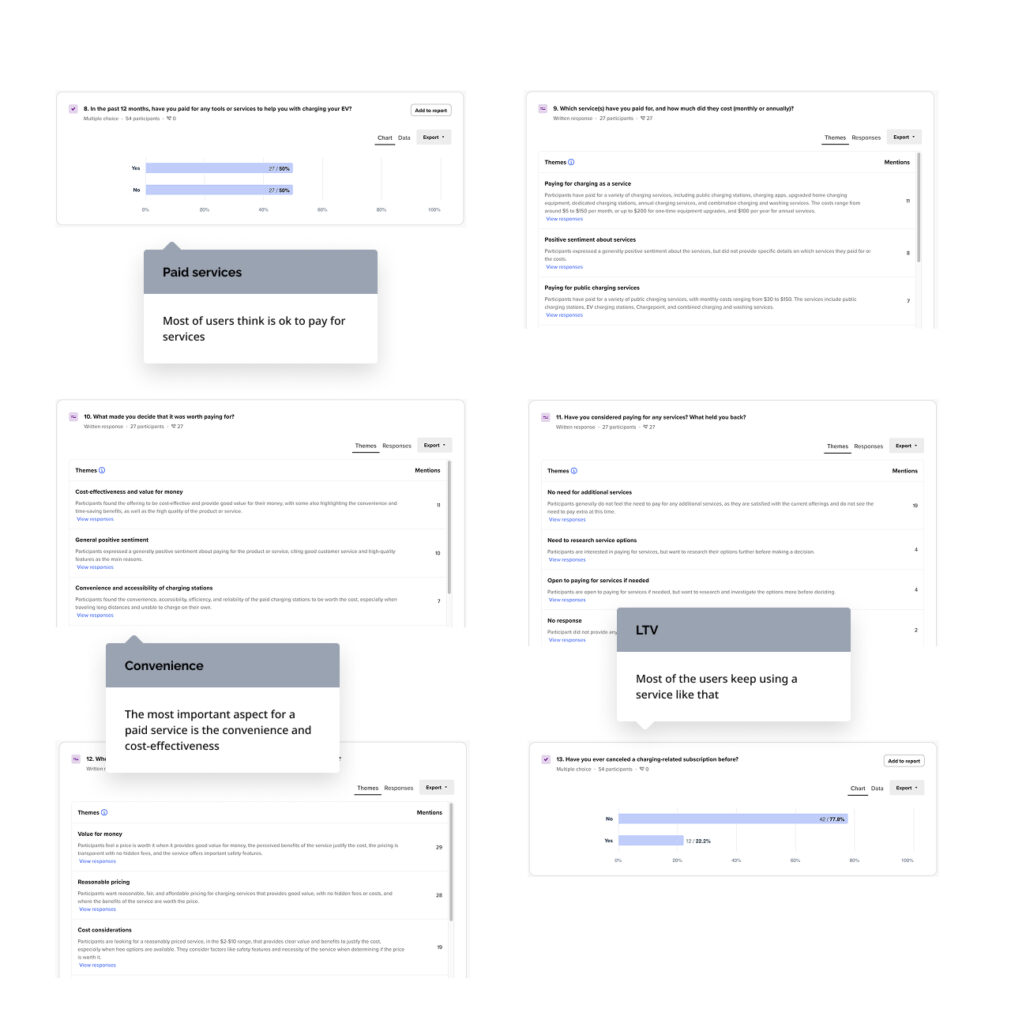
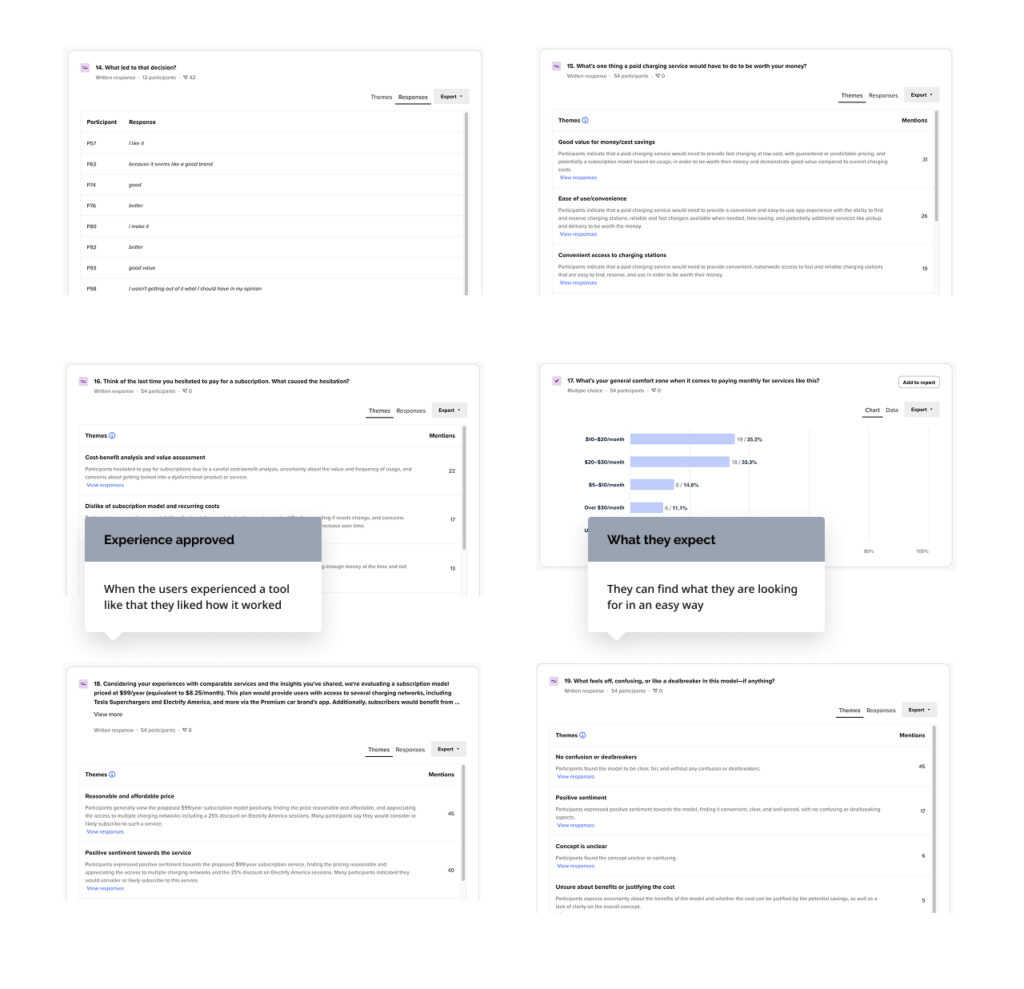
To better understand the maintenance scheduling market, we interviewed real users to gain a first-hand perspective on how they navigate the process.
54 survey responses
EV owners (United States and Canada)
User testing
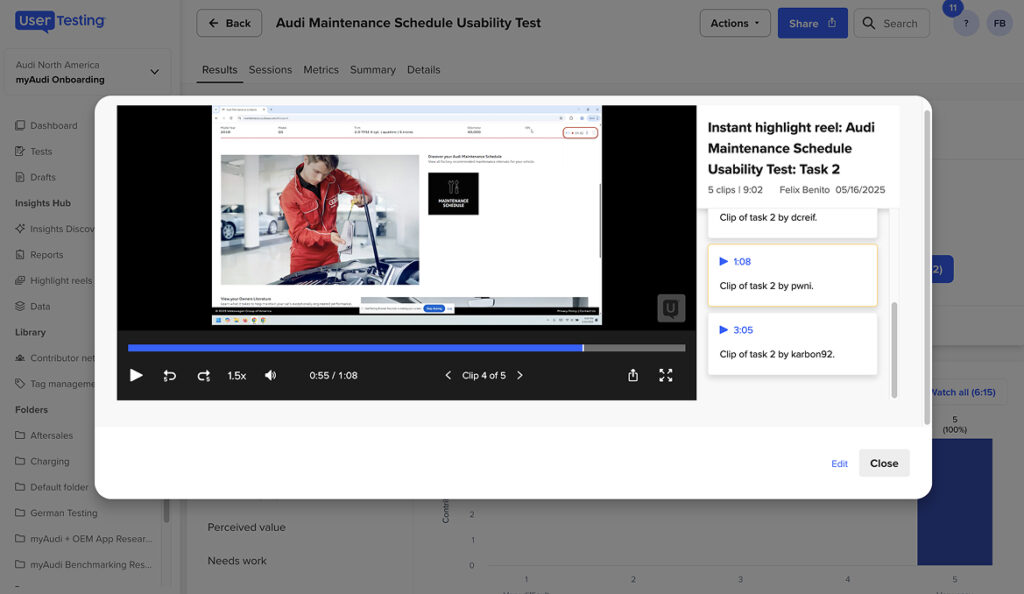
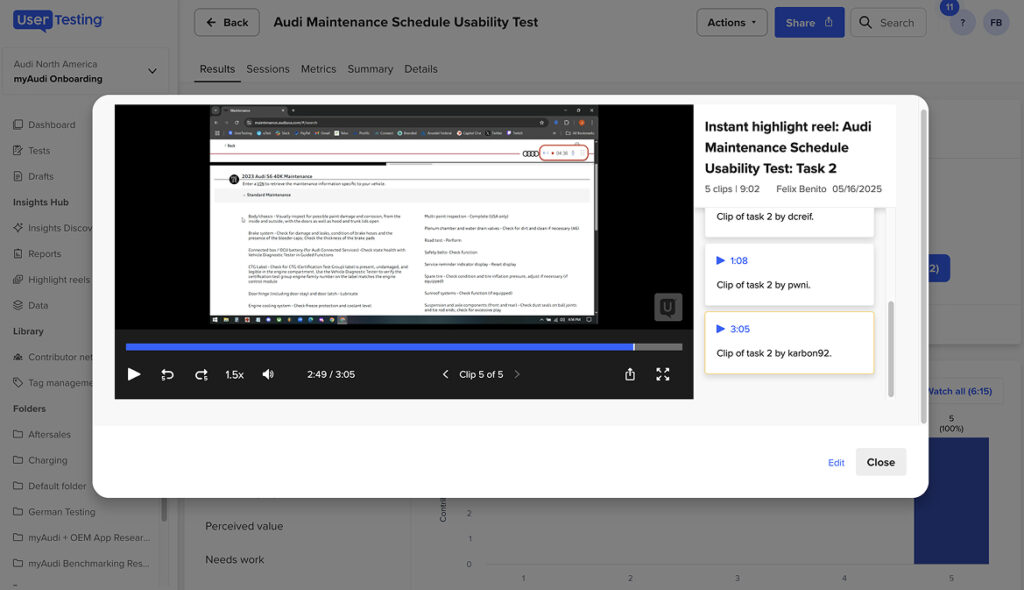
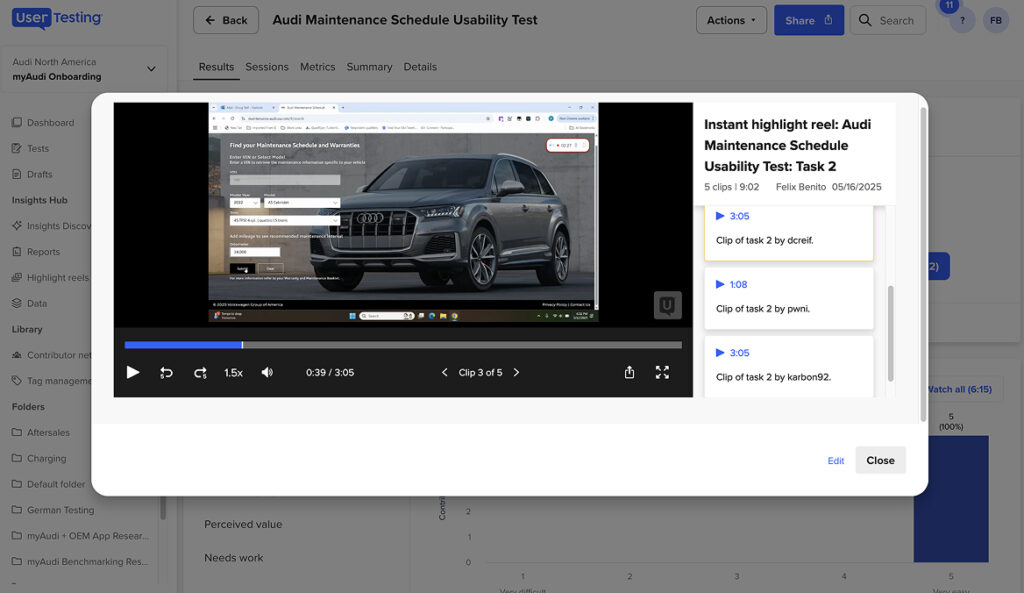
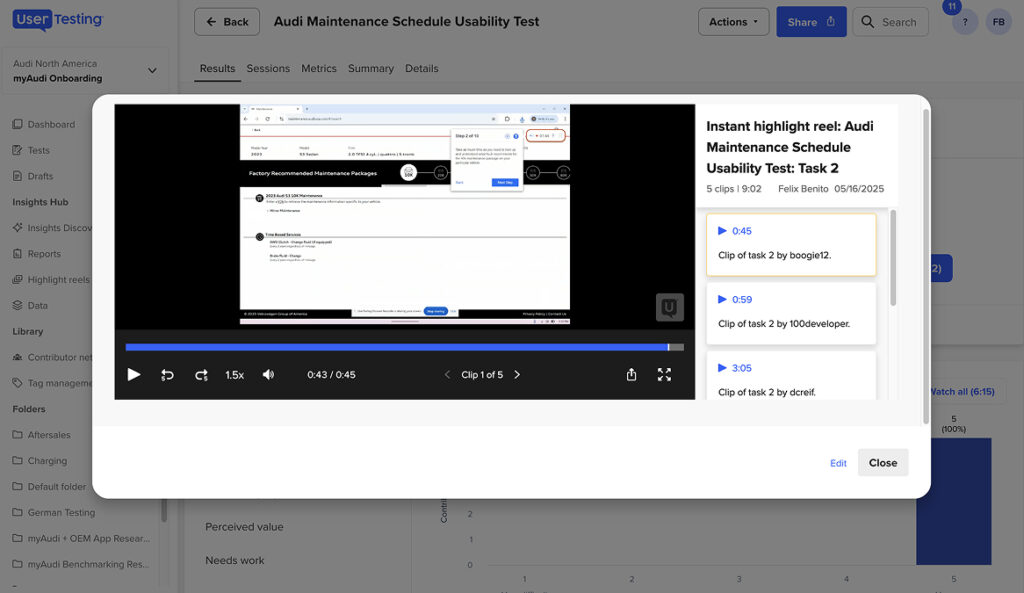
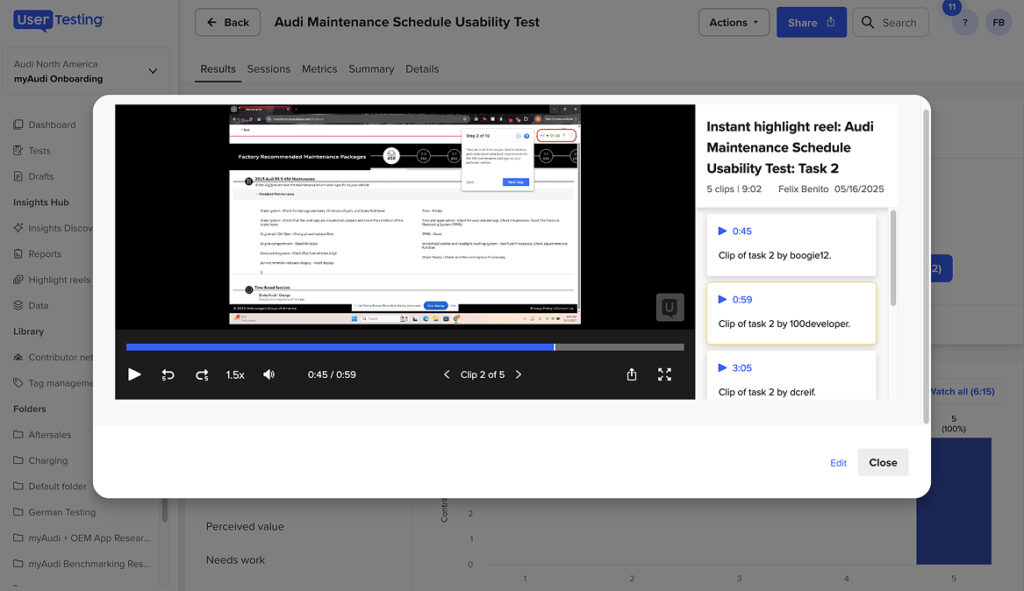
In order to check the experience and possible improvements throught the current maintenance schedule we did a user testing with some real users to identify pain points, understand user expectations, and gather feedback to improve the process for EV owners.
8 user testing realized
EV owners (United States and Canada)
Personas & empathy map
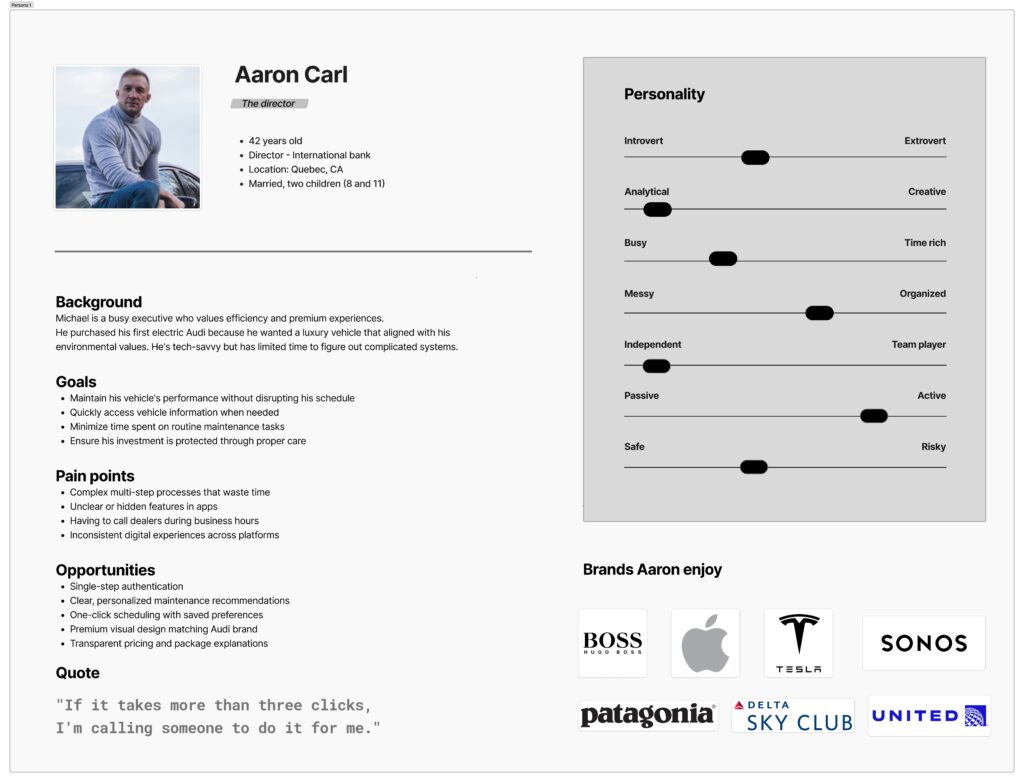
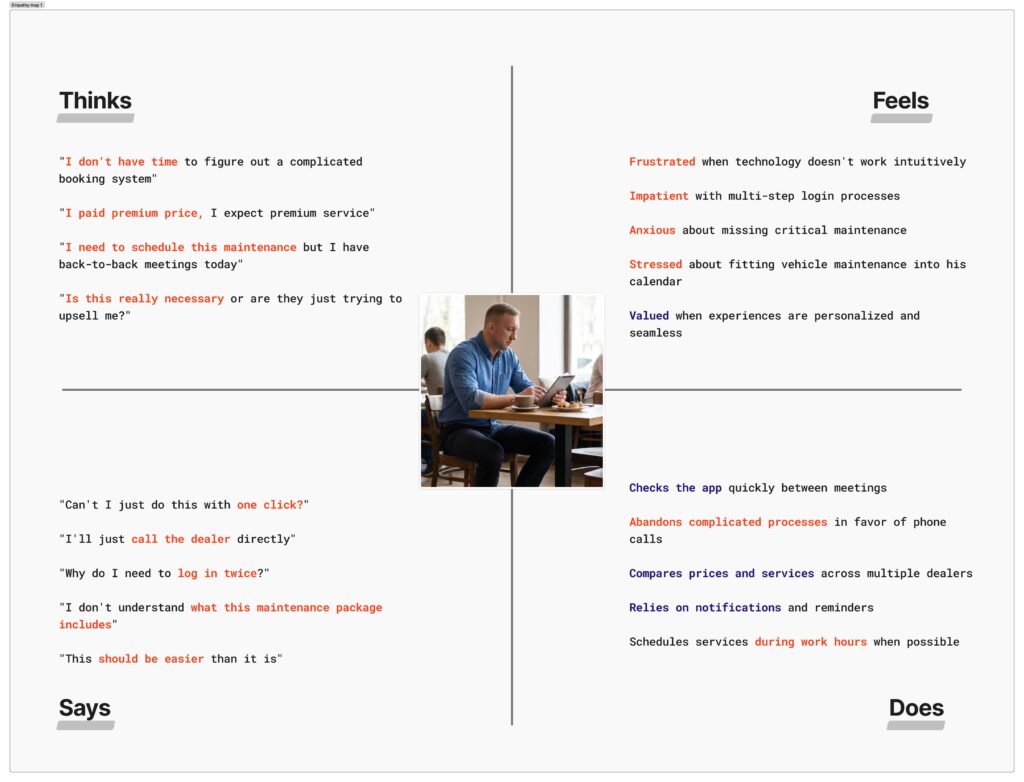
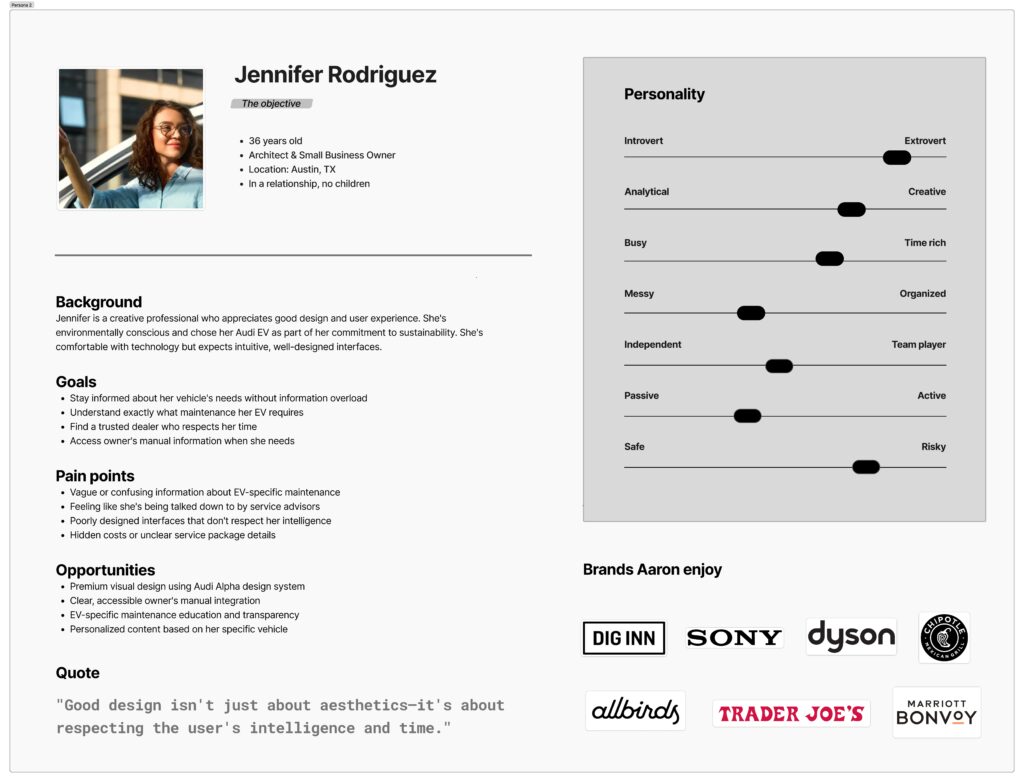
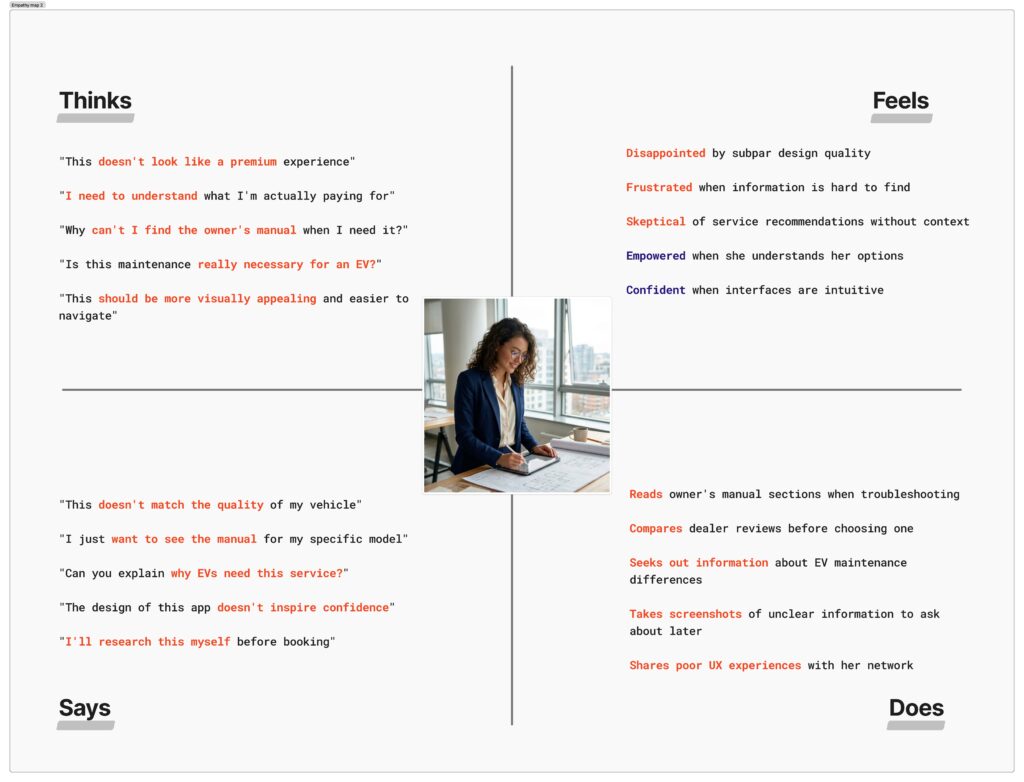
Synthesizing user research insights, I developed two data-driven personas with comprehensive empathy maps to guide the Audi myAudi experience design.
Persona 1
Persona 2
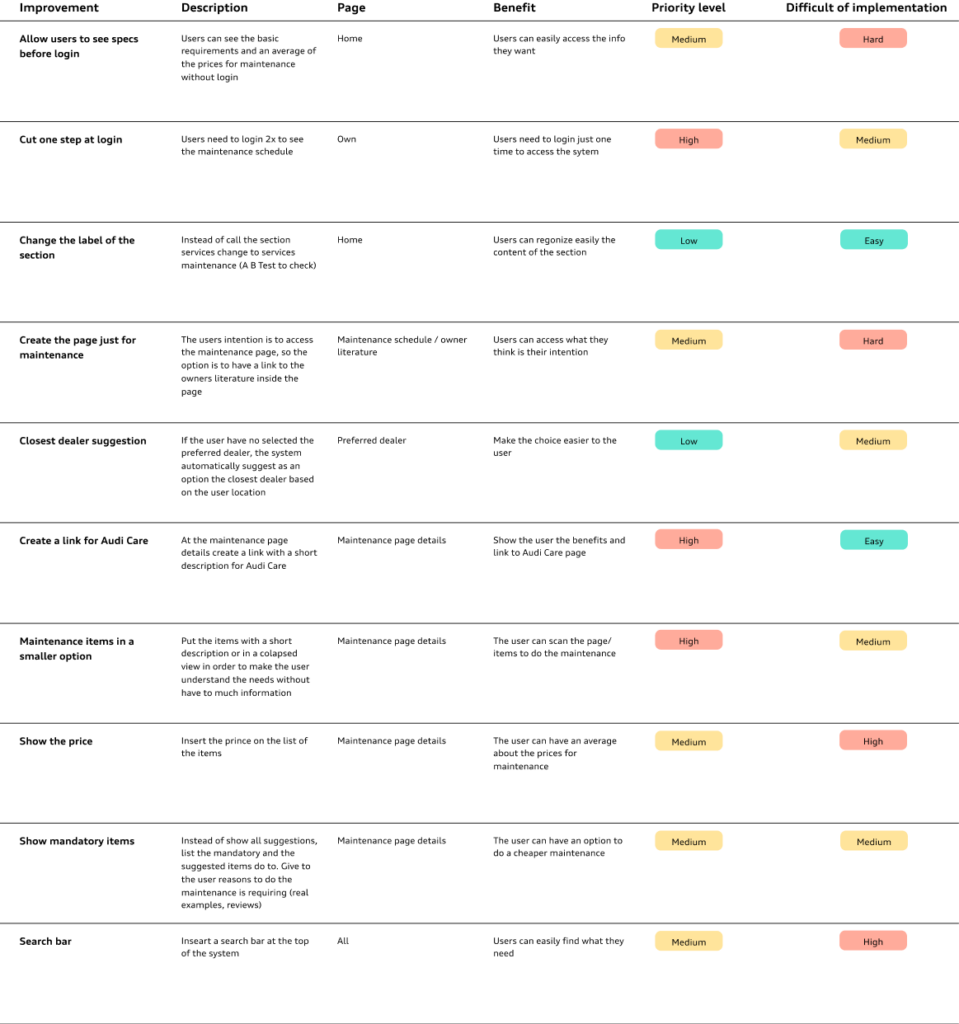
Table of improvements
The proposed table of improvements offers a strategic roadmap focusing on reducing user friction and enhancing accessibility across the user journey.
High-priority items like cutting one login step and simplifying the display of maintenance options are key to directly improving the poor engagement metric.
By prioritizing these design changes, the product design effort can streamline the user’s path to service booking, making the process intuitive and reducing the incentive for users to abandon the portal.
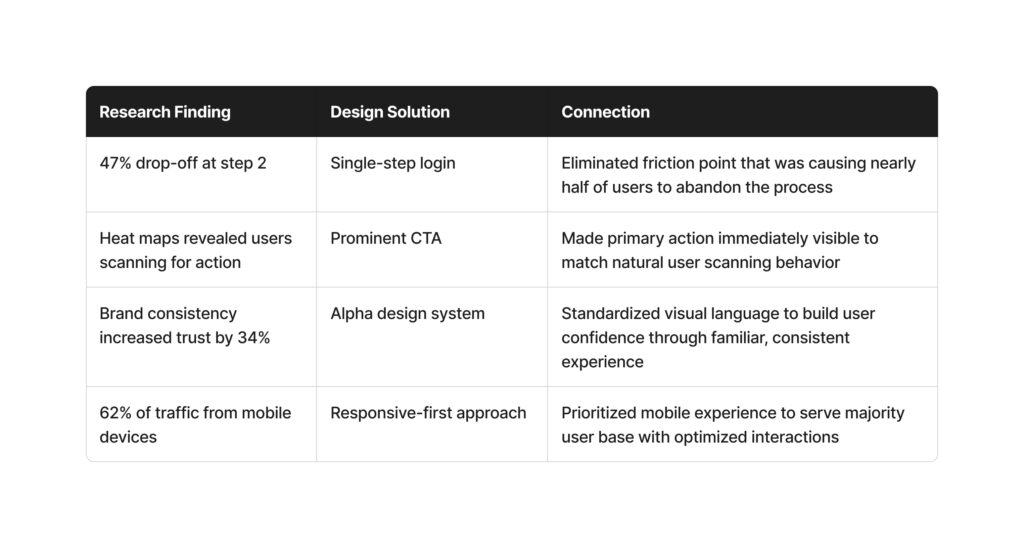
Design decisions
With clear problems identified, I moved into defining who we were solving, this is a table of desisgn decisions with reasons of why I choose each section above.
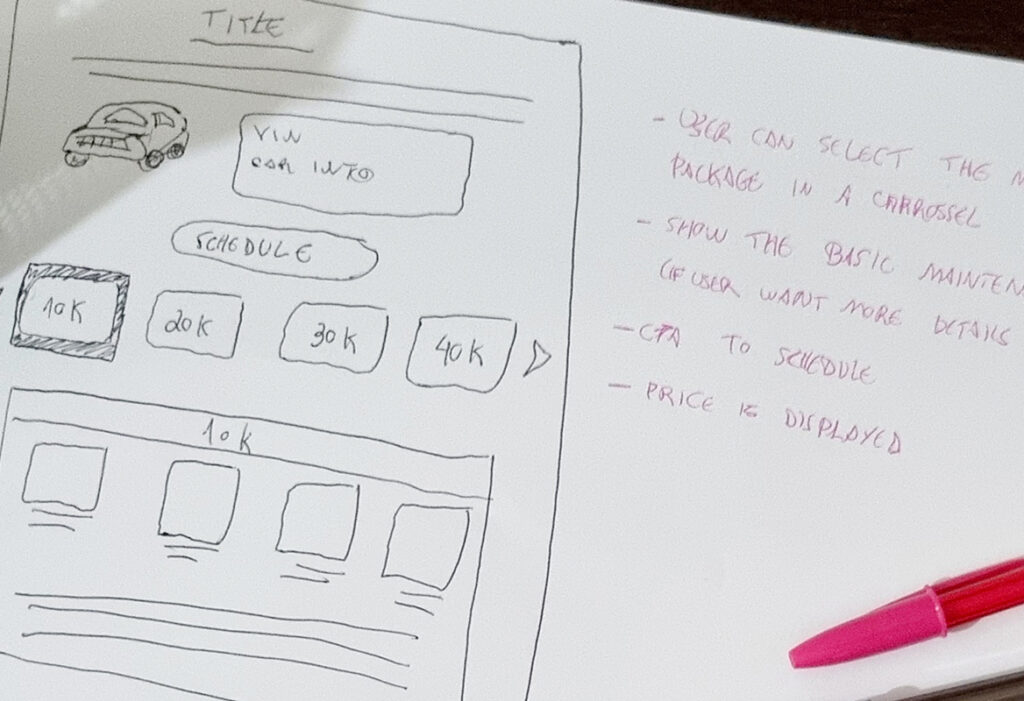
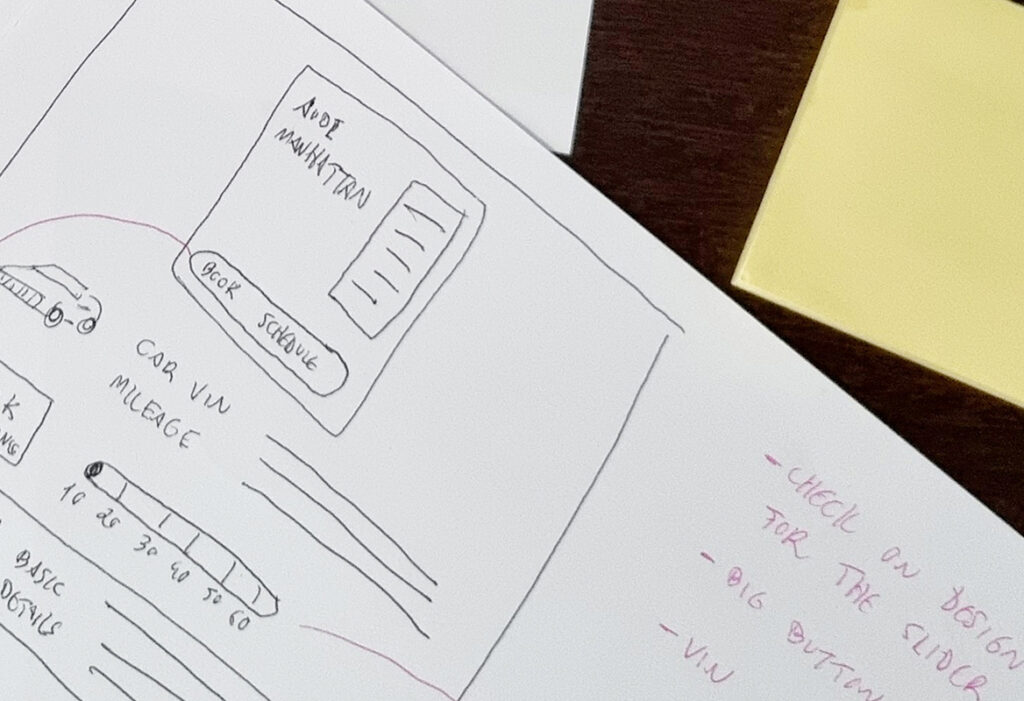
Sketches
Based on the result from research, tests and analysis I started to sketch my solution trying to solve the problems identified in the first steps.
AI refinement
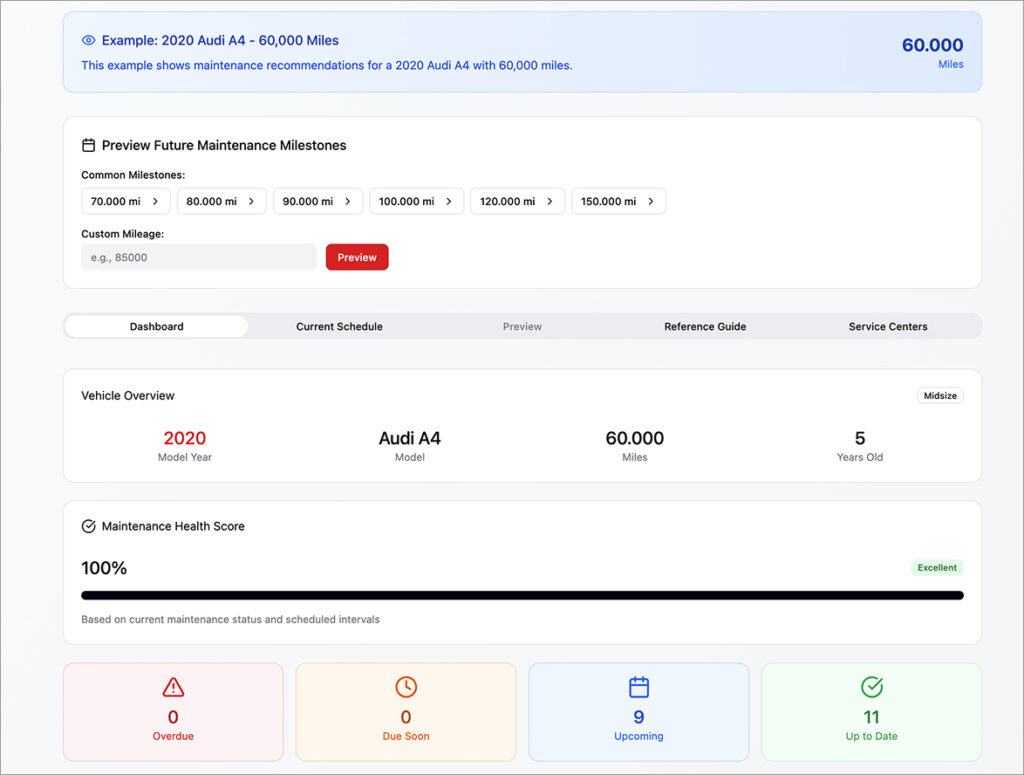
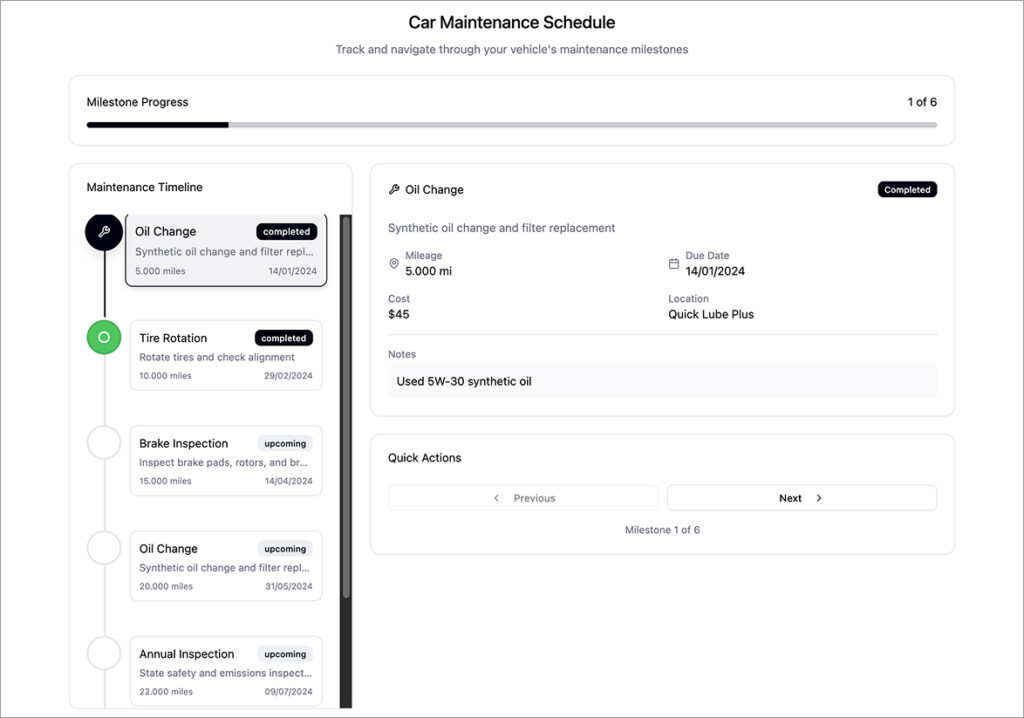
After defining the fundamental structure through sketching, I moved into digital ideation, utilizing AI-assisted tools like Figma Make to rapidly iterate on visual concepts and develop a high-fidelity direction for the final product.
Proposal
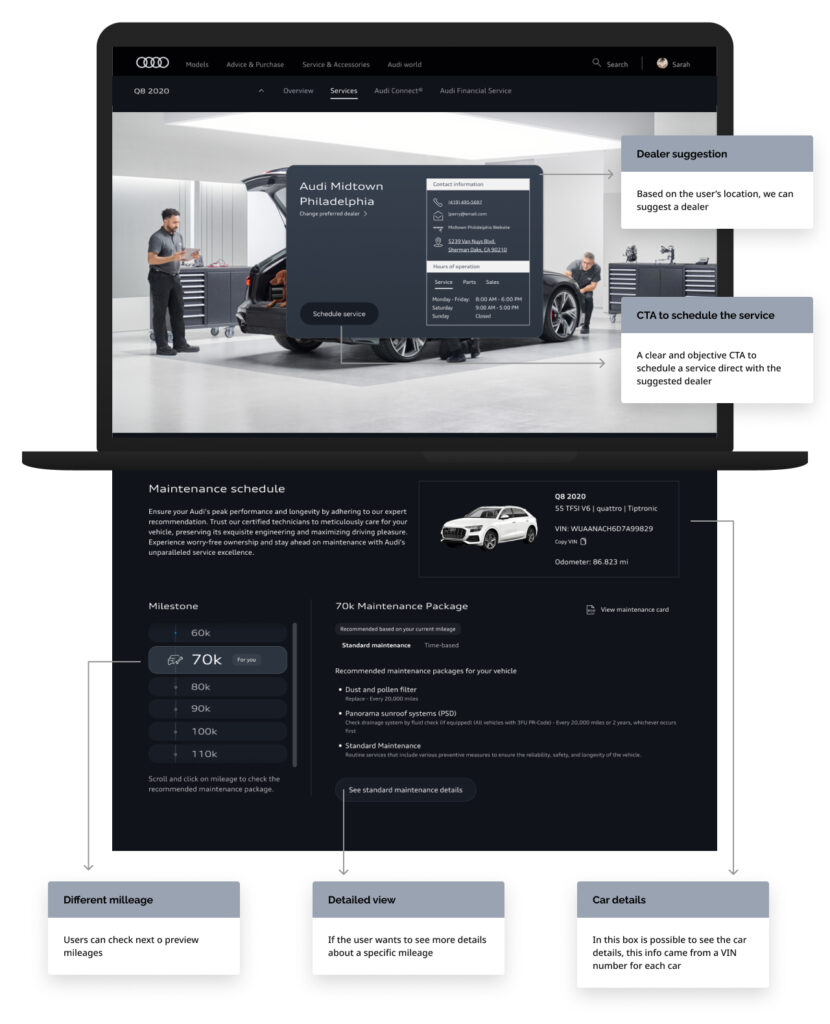
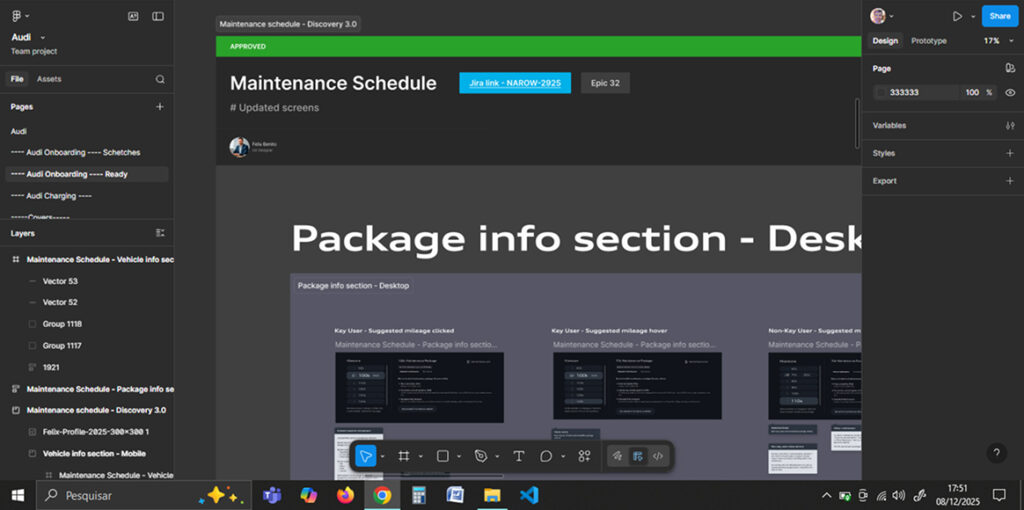
Once I find a nice path I started to create the high fidelity prototypes in Figma to have deep discussions with the team and managers, the final design was adapted to the new Audi design system called Alpha.
Design Principles (derived from research):
Effortless Access: Every task in ≤3 clicks
Premium by Default: Visual quality matches $80K+ vehicle
Build Trust: Honest recommendations, no hidden costs
Responsive design
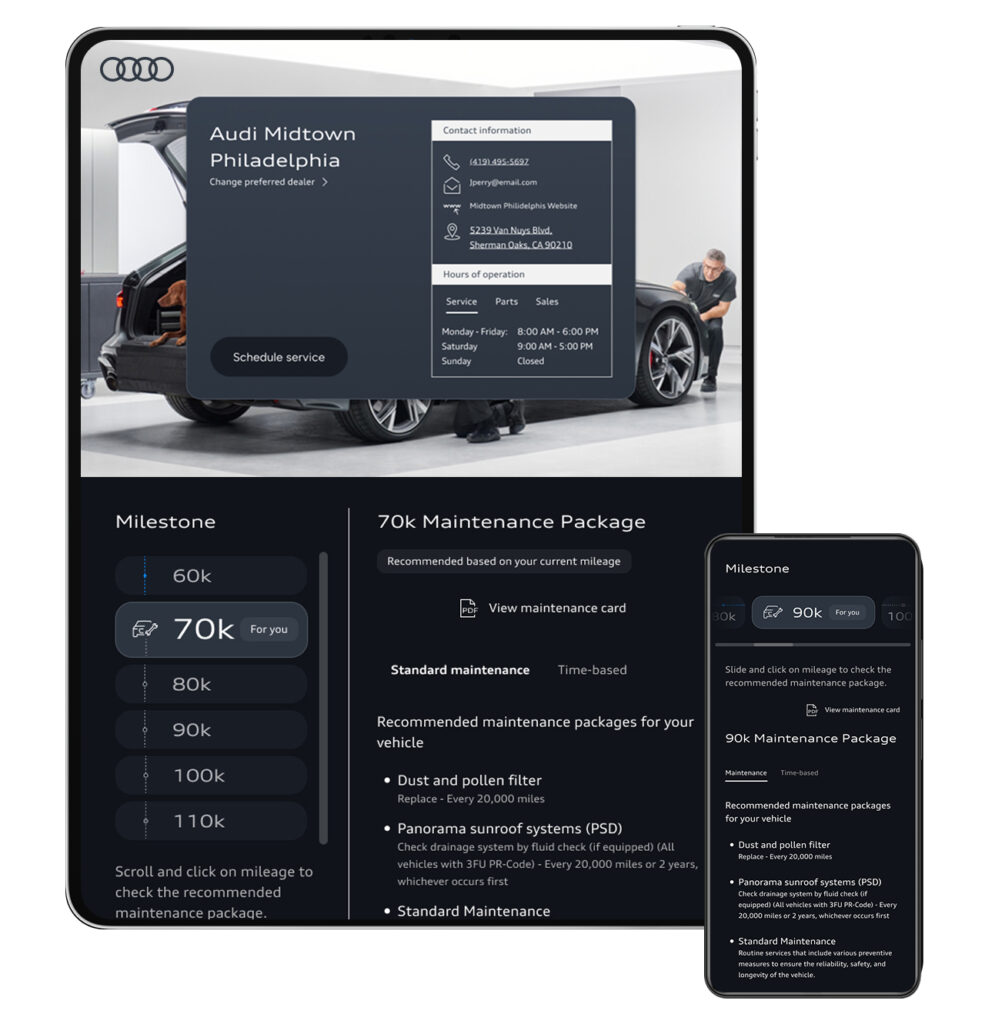
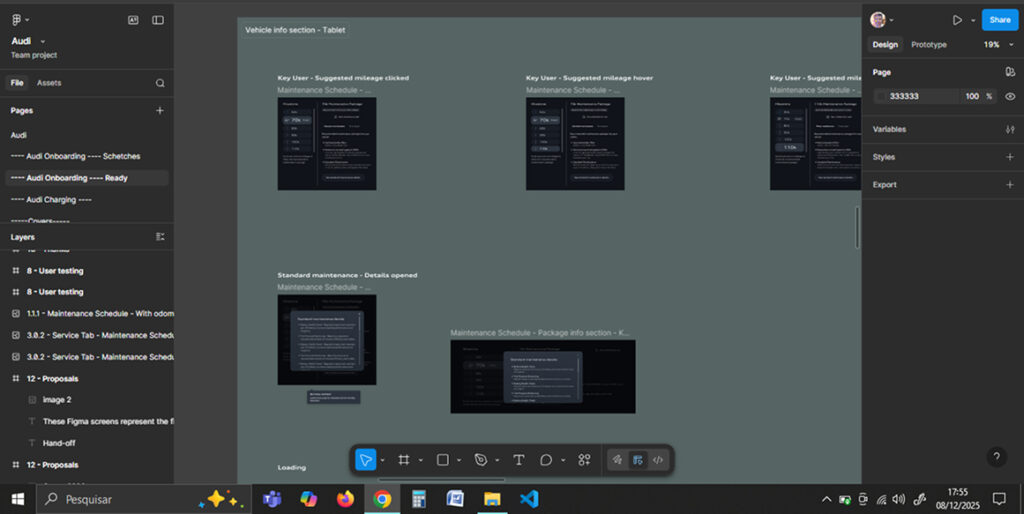
I implemented cross-breakpoint iterative process, testing various visual and functional approaches to ensure the final responsive design delivered a premium, intuitive experience across all critical user contexts, from the in-vehicle screen to mobile and desktop environments.
Hand-off
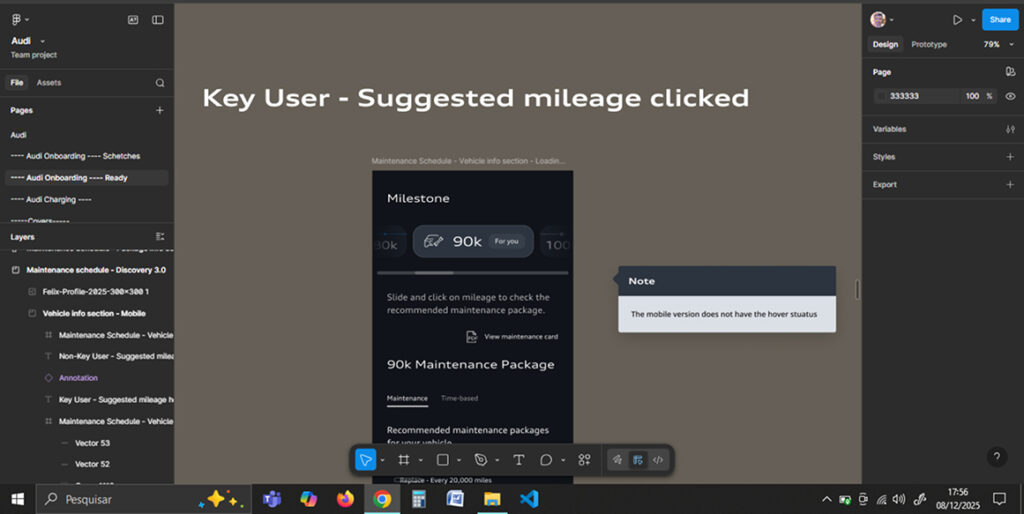
These Figma screens represent the final, pixel-perfect design for developer hand-off, encompassing all possible user scenarios, comprehensive dev notes, and annotations.
Actionable Insights: Leveraging research, data analysis, and user testing to generate evidence-based content and a roadmap for iterative improvements.
Cross-Functional Collaboration: Facilitating deep integration with key stakeholders, including Data, Business, Sales, and Service departments.
Strategic Prioritization: Coordinating with development teams and management to align project goals with technical feasibility and business objectives.
Rapid Prototyping: Utilizing AI-driven tools to accelerate the creation of low-fidelity prototypes for early-stage validation.
Systemic Optimization: Identified and resolved core pain points, resulting in significant improvements to the overall system architecture and user flow.